Fondation Louis Vuitton
Brunello Favilla
Architecture today can rarely be separated from the dominant feature of our time, globalization. New buildings are proposed as economic investments aimed at selling services and products that come from the global market. The Louis Vuitton Foundation is the epitome intervention of an internationally renowned archistar which meets the client’s request of a typical Gehryesque building and the architect responded with great use of leadership.
The Guggenheim Museum in Bilbao streghtened Frank Gehry’s worldwide reputation, thanks to his forms and to his deconstructed style. While visiting it, I acknowledged the value of this incredible open air sculpture, so playful and innovative. The last Gehry’s project I visited has calmed down my enthusiasm and I have decided not to publish any picture of Bodegas Marqués (Rioja, Spain) in order not to trample on some reader’s sensitivities.
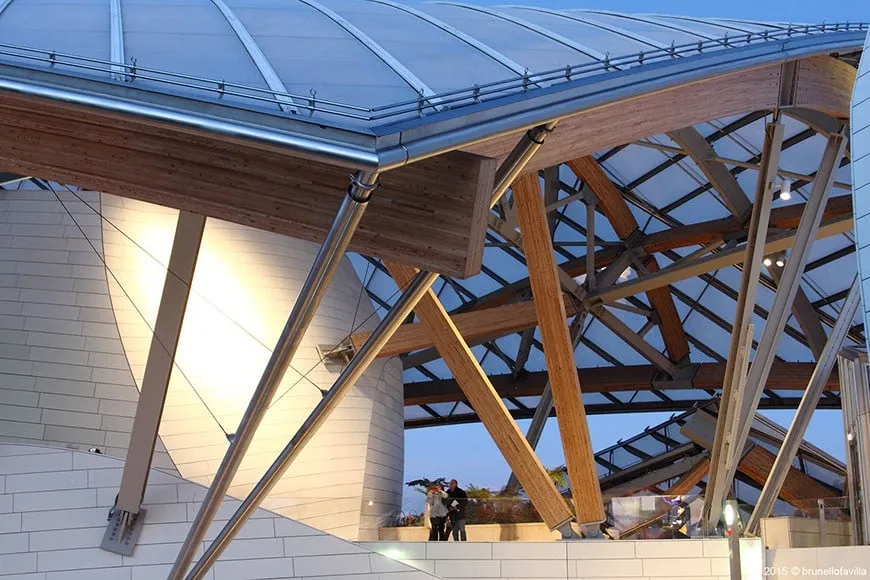
Located on the edge of the Jardin d’Acclimatation, where Bois de Boulogne starts, the Foundation consists of four volumes, called icebergs, which host 11 exhibition galleries and an auditorium, all connected one to each other at every floor/mezzanine and protected by 3,600 glass panels, in addition to 15,000 tons of steel (twice the Tour Eiffel).
Paris, Nuit Européenne des musées
The free entrance by night is a good opportunity to visit with critical sensibility the new Gehry’s building, appreciated for many, despite the initial controversy.
Going out from Les Sablons Metro station, an unceasing flow of tourists and dozens of brown tourist signs guide you towards Louis Vuitton Foundation. Big and scattered oaks compose the filter between Bois de Boulogne and the city; houses, roads, paths, bike lanes, rails, all cross this urbanized belt and then a busy road divides it from the wild forest. There stands the Foundation in all its grandeur.
12 sails on a body of water.
They say it also looks an insect.
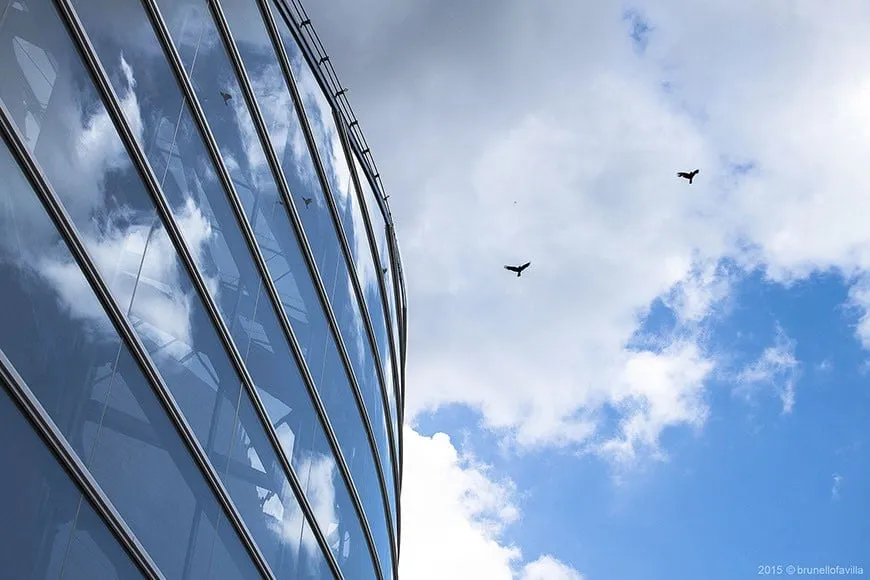
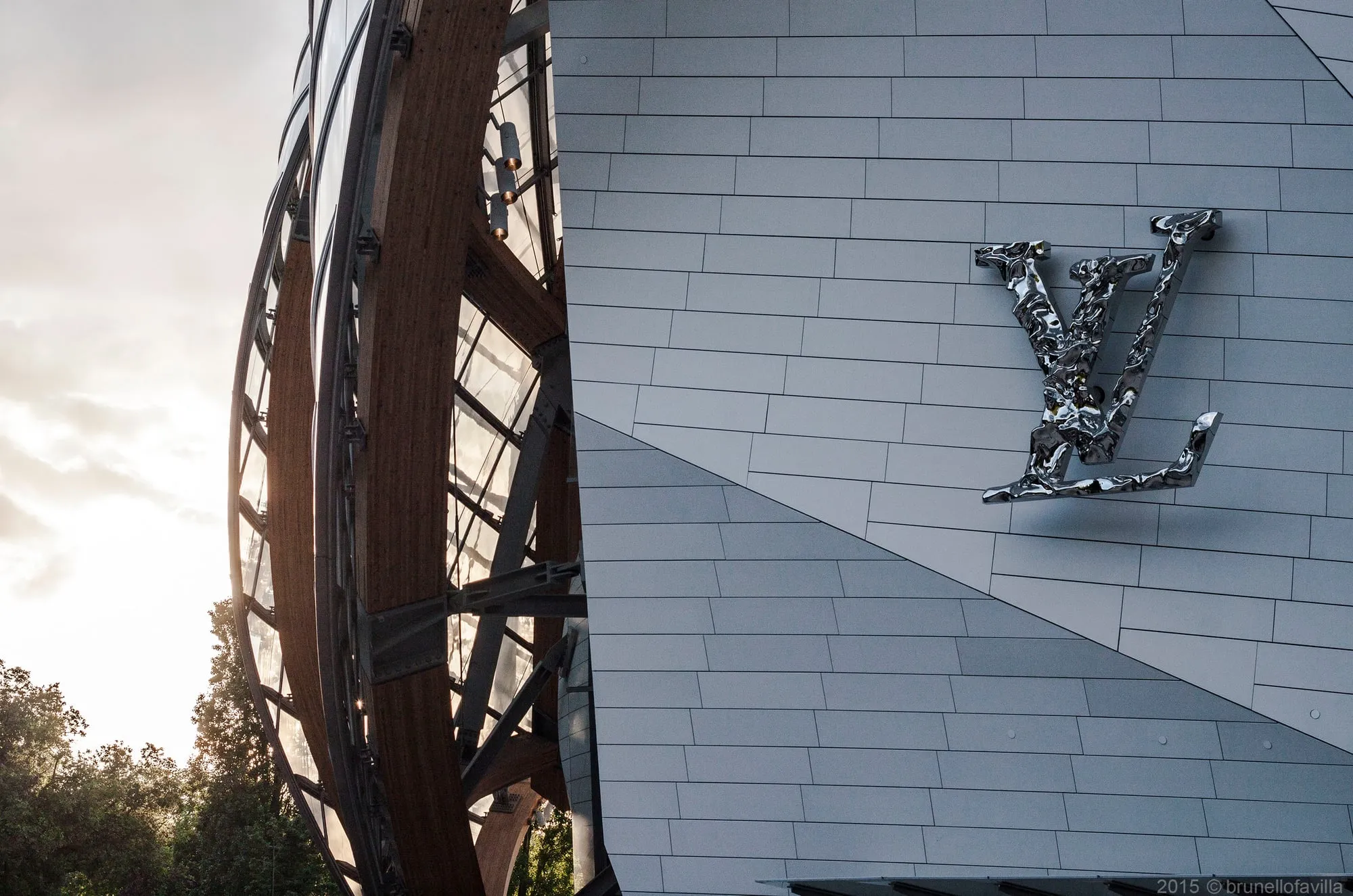
The enormous glass shells, through a play of transparencies and reflections, show the imposing structure, a tangle of wood and steel, and certainly invite the visitor to discover the inside, at least out of curiosity.
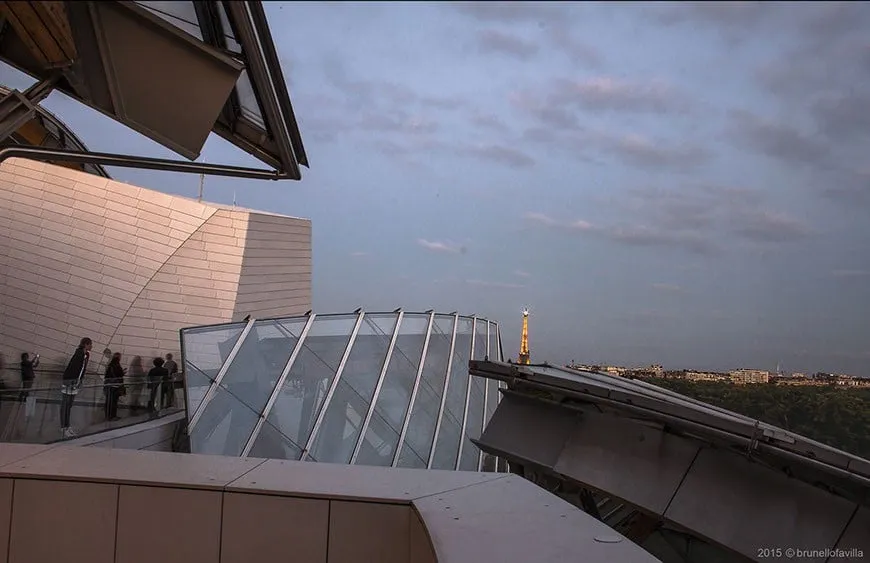
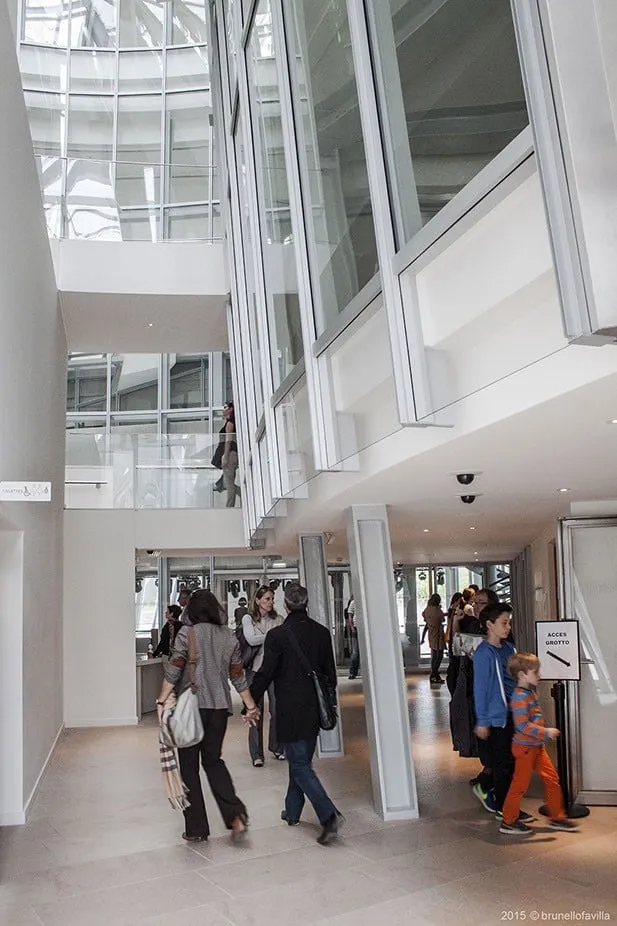
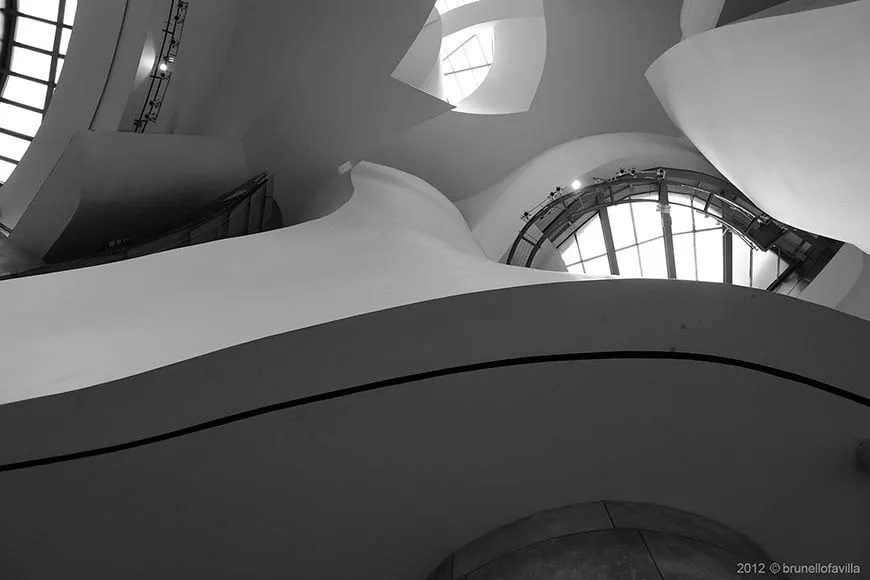
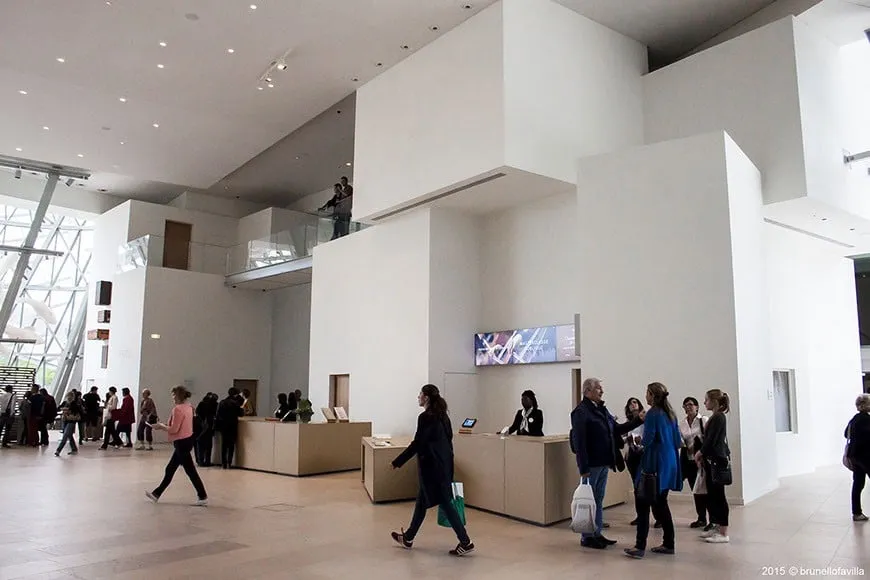
The building from its terraces offers new views of the Grand Paris, from Bois de Boulogne to La Defense, giving a back sit to the Eiffel Tower and forgetting Montmartre and Arc de Triomphe. Walking through the terrasses is an alienating experience: a continuous discovery of views, of the landscape and of the building itself. A series of dynamic and chaotic events. The complexity of the shells turns inside in a mess of squared rooms, residual and unresolved zones, and then millions of doors in every endless, winding corridor. The plan is puzzling, it is impossible to pick his way through the maze of rooms.
A staircase, a hallway, bathrooms. Another staircase. An elevator, a corridor, more toilets and then, an escalator. It happens even to go down with the wrong stairway and having to go up again, to take the one next.
Frank Gehry, called to repeat a Guggenheim in Paris, seems to have forgotten in Bilbao the incredible impact of the main hall on the visitor and to have brought along only the chaotic exhibition itinerary, unsuitable for the intended function. There, you feel like entering into the bowels of a sinuous ad charming sculpture, here you just get lost.
However, one more time (like Richard Serra’s in Bilbao), a monumental art installation by Olafur Eliasson breathes life into the most attractive exhibition space. Mirrors, lights, shadows, colors, rhythm. This interactive artwork, so perfectly integrated with the space, makes you find in the lowest level the dynamism and alienation left up on the terraces.
The temporary exhibition Les clefs d’une passion, open until the 6th of June, astonishes for the large number of iconic XX century’s paintings exposed (The Scream by Munch, L’homme qui marche by Giacometti, La danse by Matisse, etc). The exhibition’s main theme is poor and it feels like they just wanted to attract visitors, collecting the most famous artowrks available. I hope that the cultural program so much acclaimed for this new cultural chapter for Paris will be refined and well built, instead of just turning art into a show.