Larderello: Geysers and Utopias
Riccardo Bartali · · Automatically translated from Italian
The period between the 1950s and 1960s holds hidden treasures within the landscapes, in the most remote and forgotten corners, representing the aspirations of communities and businesses that dreamed of a bright future in the places they called home. Some examples include the urban planning projects for workers’ villages, the historic flower market in Pescia (designed by the firm Quadrifoglio Savioli-Ricci-Gori), or, perhaps most importantly, the magnificent church by Alvar Aalto in Riola, completed in 1978. I won’t delve into the details of that church, but I always find myself drawn to it, even though I don’t fully understand it.
Among these small gems of experimentation and hope, whether pleasing or not to the modern eye, the church of the Blessed Virgin Mary in Larderello, in the province of Pisa, stands out, not just for its uniqueness. A short trip, starting from Volterra, crossing the Val di Cecina and heading towards the Amiata region, places it within the harsh, Dantean landscape of the geothermal territories, which have been intensely exploited for two centuries for the production of boron and electricity. At the entrance to this region lies the village of Larderello, born from nothing and destined to disappear.
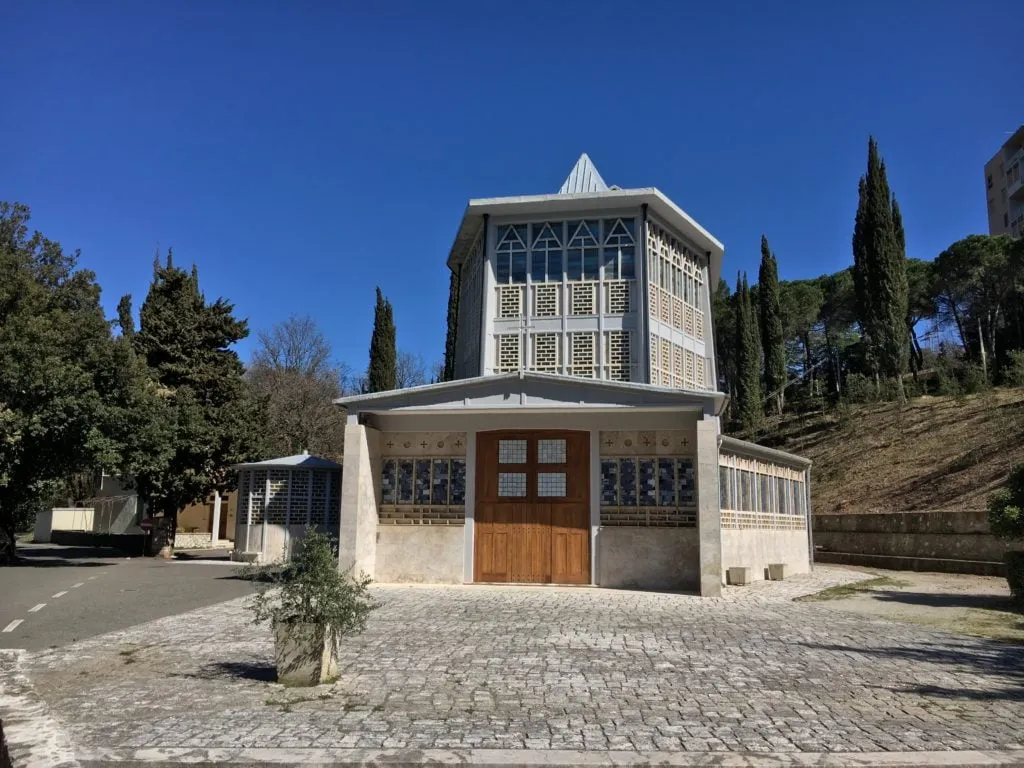
Hidden among the towering cooling towers and the equally gray, smoky rock plains, the village is tucked away. In its hypothetical center, amidst the curves and trees that miraculously resist the onslaught of humans and the environment, stands the parish church, the result of a deeply personal project by Giovanni Michelucci.
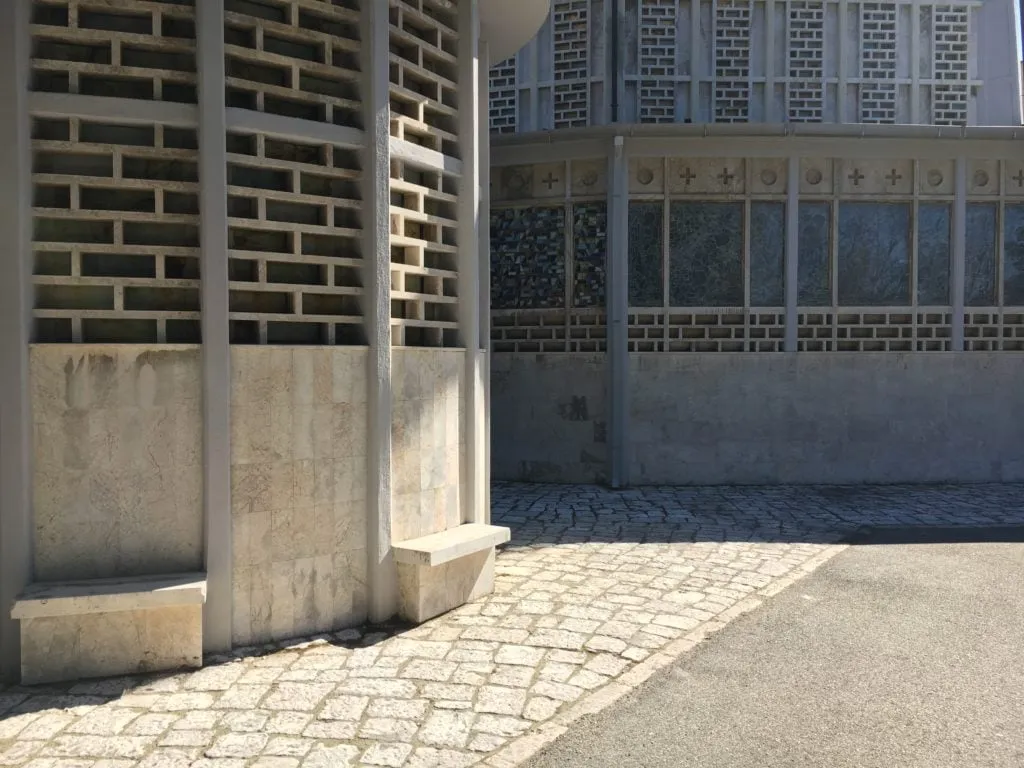
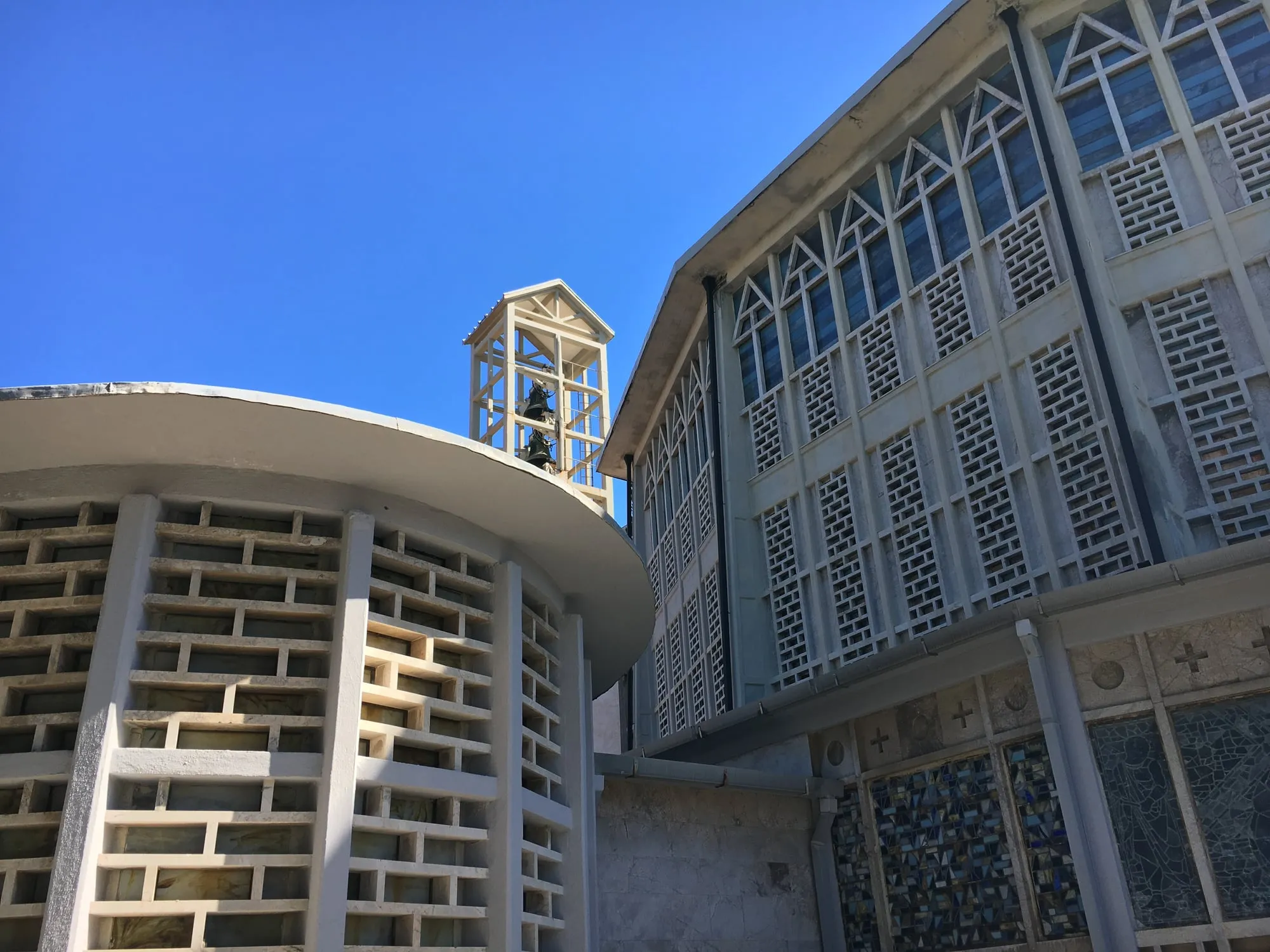
After the staircase, the low, pseudo-portico that serves as the entrance, contrasts with the tall drum and tower, topped by a pediment, concealing the entrance to the main hall. This hall evokes the experimental spirit of French Baroque architecture with its elongated central plan, blending elements of the basilica with the grandeur of mausoleums. The soft, internal light, diffused through opal and glass, reveals the rigorous volumes and geometric patterns of the concrete structure. The exterior is characterized by the interplay of colors between the white Carrara marble, the red marble from Collemandina, and the translucent stones from the Volterra region (alabaster and the aforementioned opal), which are arranged in a strict tripartite division, leading to the drum of the octagonal dome. Here, the pattern becomes denser and more elaborate, with intricate inlays interwoven in variations of opacity. The “dome” showcases the rigor of reinforced concrete and the experimentation of that period: its rectangular cross-section forms a web-like structure, and at the top, there is a metal roof with a skylight that allows direct light to enter.
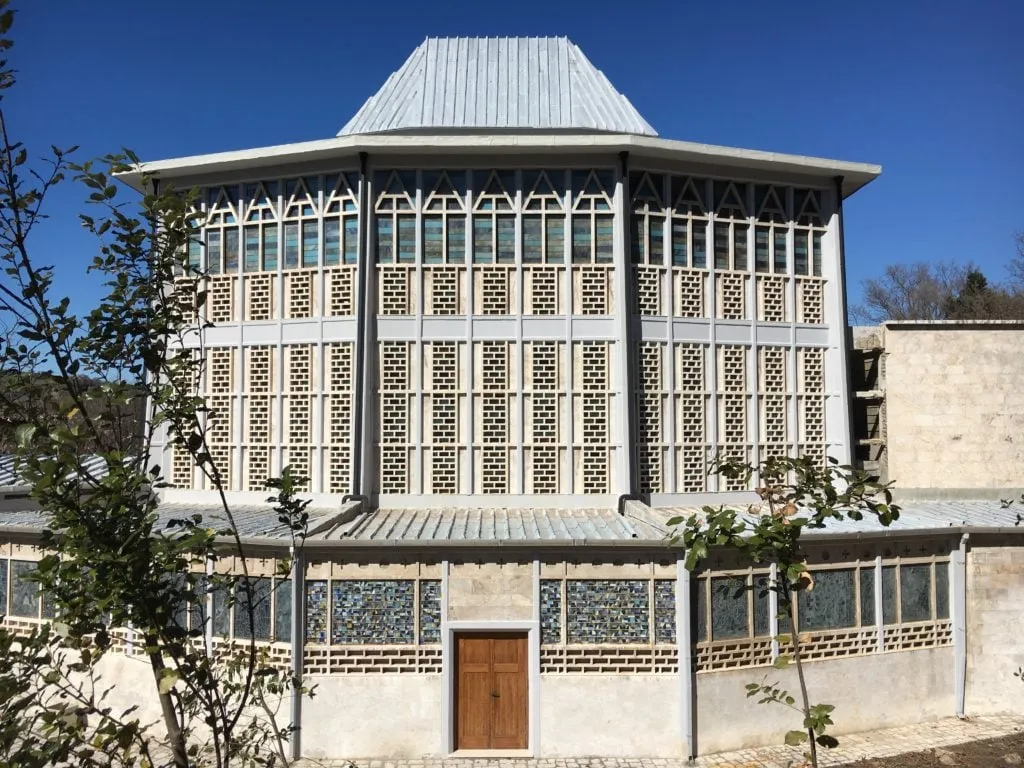
The volumes clearly evoke industrial culture: the bell tower is a drilling tower, with its exposed skeleton of four pillars, rarely interrupted; the height and intricate design of the “dome” recall the wooden cooling towers used when the village was still in its early stages, and the land was being exploited for boron extraction under the watchful care of Count de Larderel. These towers were likely only seen in images, but they were so fascinating that they remain in the background of this geometry, which makes the church visible from afar, yet distinct from the industries it resembles.
The architecture is completed by the works of prestigious 20th-century artists, such as Mino Rosi in the historical stained glass windows, Rodolfo Fanfani in the geometric panels, Consortini in the statues of the baptistery, and Jorio Vivarelli in the crucifixes and the statue of the Madonna, which demonstrate the great care and investment that went into this now-forgotten heritage.
Perhaps many things should be reborn from here. Not from the secondary aspects, of course, but from the desire, the hope, and the illuminating genius that views people not as a mere workforce, but as intellects to be nurtured, so that they can develop the capacity to save themselves. Many small lessons in sociology, even before architecture and urban planning, are embedded in this area. There are numerous attempts at fostering cohesion and creating a collective and social identity, but these have been transformed by neglect, spiritual abandonment, and a lack of education in beauty and pleasure, into haphazard collections of houses that, in our eyes, fail to do justice to the efforts of those “little ants,” crushed by the lava while tending to their precious common good.