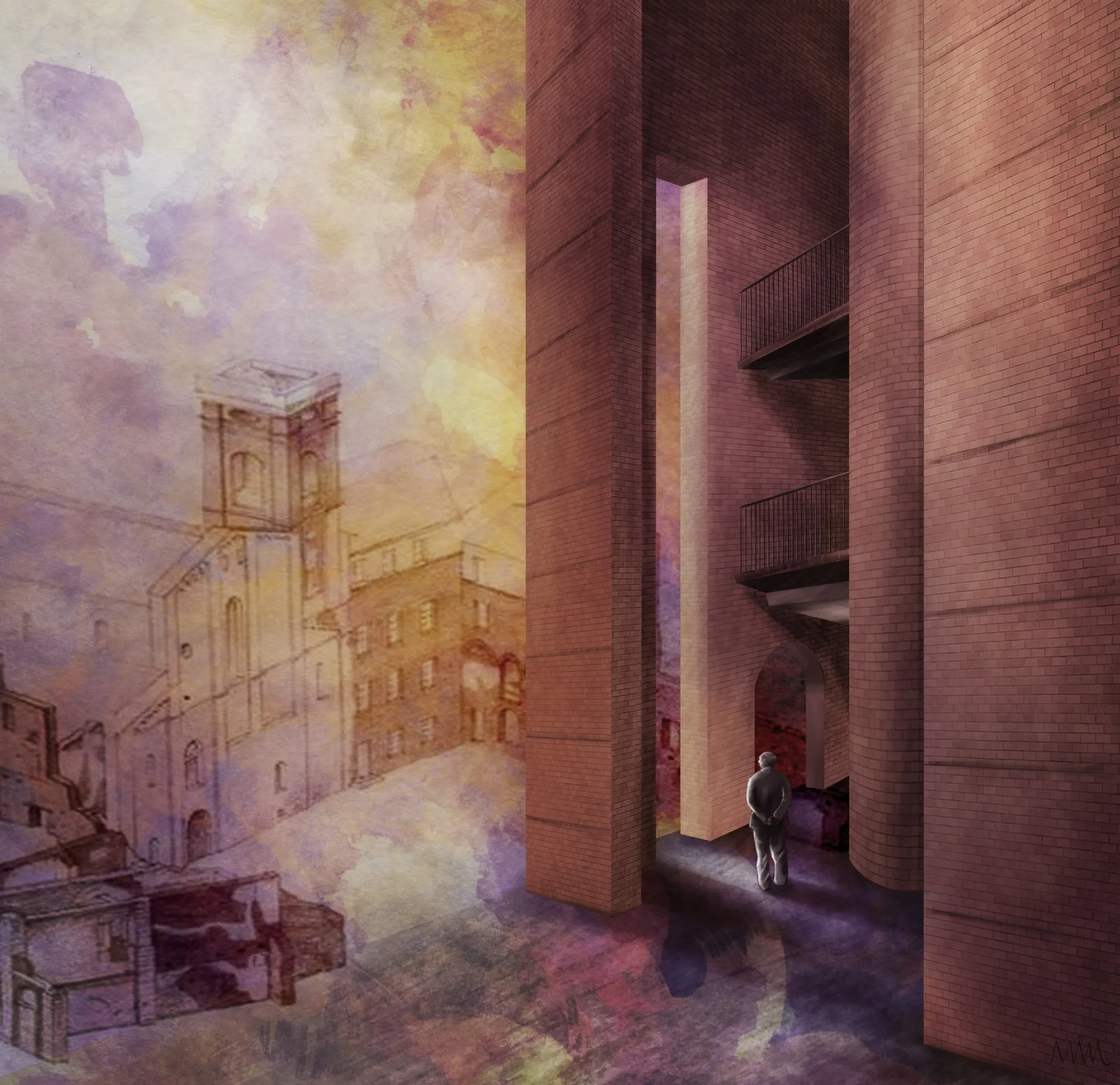
About contrast in zen gardens
Andrea Crudeli ·
Temple bells die out.
The fragrant blossoms remain
A perfect evening.
Matsuo Basho, 1644–96
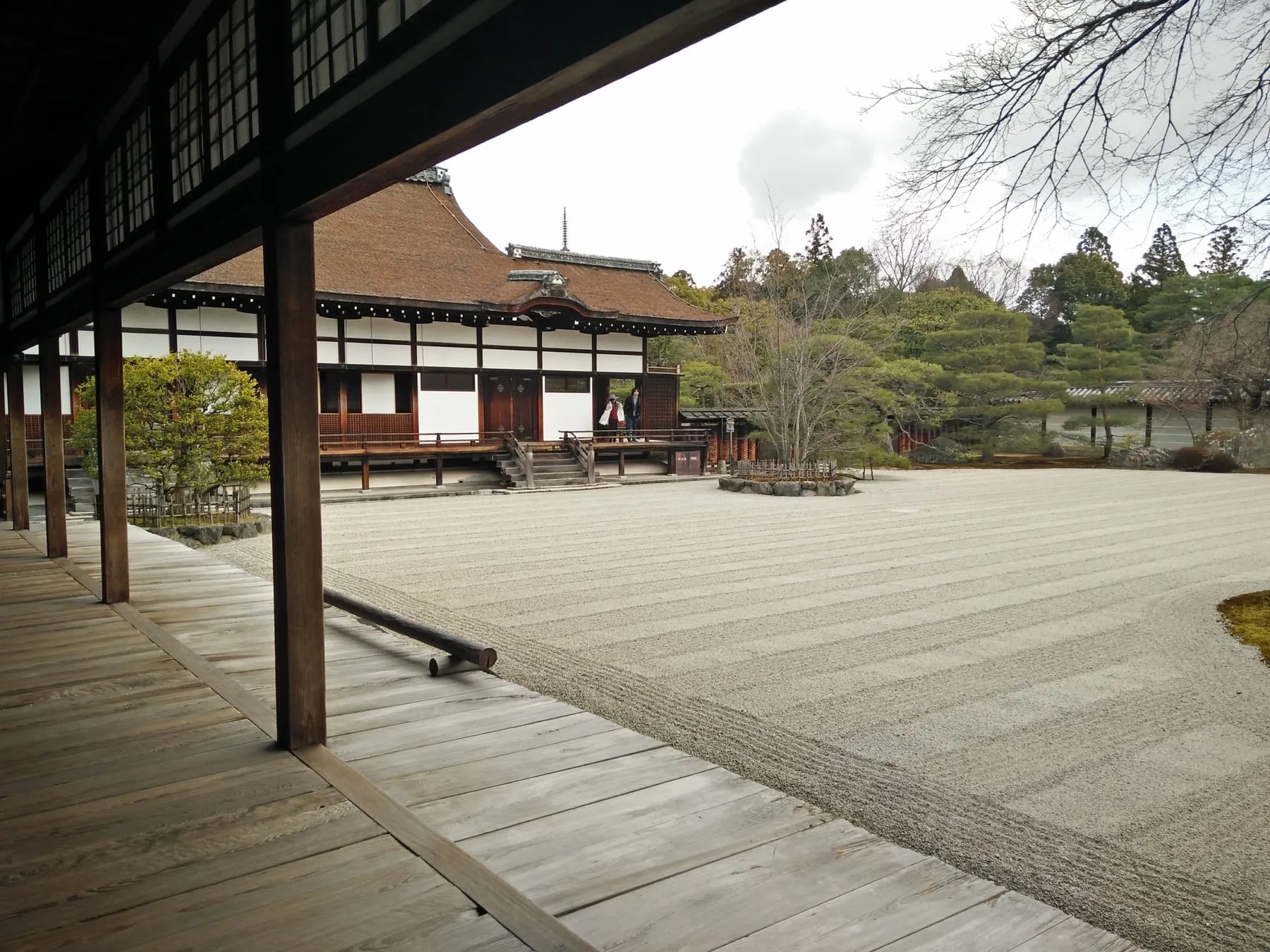
When I sat cross-legged on the wooden planks rising one meter, maybe more, above the most famous rock garden on the other side of the world, I felt, after a long time being far, at home.
Belonging to a place is a feeling that I can’t keep with me since a long time, but for a game of unexpected circumstances, for some mysterious quallity of Ryoan-ji zen graden in Kyoto, I felt the same sensation experienced in front of the familiar landscape in Tuscany. As though Friedrich’s traveller in front of the sea-fog, my enchanted eyes lost toward the void failing to capture all the beauty in a single view, the same relation spectacle-spectator, the same feeling of peace and silence.
Distant places, so different, but capable of inspiring the same introspective motion. A contrast so interesting, that intrigued me finding some others. The Japanese tradition of dry gardens continues to be a reference in the debates of many architects, japanese and not. This perpetual beauty strikes where the contemporary sensibility remains impressed, perhaps because this art has not lost its ascetic vocation despite its new uses; as if it matched the timeless property of religion, it became, from a place of spirituality, a meaningful space of spirit itself, keeping the richness of authentic meanings and the role of meditation vehicle.
Intending to study more about relationships, I counted three contexts where the contrast phenomenon appears: between the garden and its context, between the garden and its elements, and between the garden and the viewer. These contexts run on two major development plans, the physical-perceptual and psychological-spiritual.
I fear that if we try to understand Japanese culture of Zen gardens with Western instruments, we would run the risk of improper readings. The analytical structure of the Cartesian method, which runs on principles of actions and reactions linked to rational implications, would be a very bad methodology combined with the Buddhist spirituality. This philosophy whose predominant justifications are placed on the perception level, where there are the feelings and emotions, is more understandable through a direct spiritual experience. Relating to its context, we discover that the urban nature of zen gardens is intended as a locus amoenus, “a place of decompression from the city stress situation, where you lose the time coordinates”. The transcendental effectiveness of the garden is proportional to chaos around it, more the environment is noisy more you can appreciate the silence of the stones. With a collaborative relationship, “nature is not nature itself, but an absolute and subjective idea of it”, and the miniaturization of landscapes has a background of uncontrolled nature, in real size, which offers scenery of unexpected power. But the most important contrast the garden alloy with the outside is the one with its ideal location of contemplation, the interior of the building the garden belongs to. This relationship has in the light changing its most significant episode: while natural light permeates every surface of outside elements, the interior remains lost in the shadows.
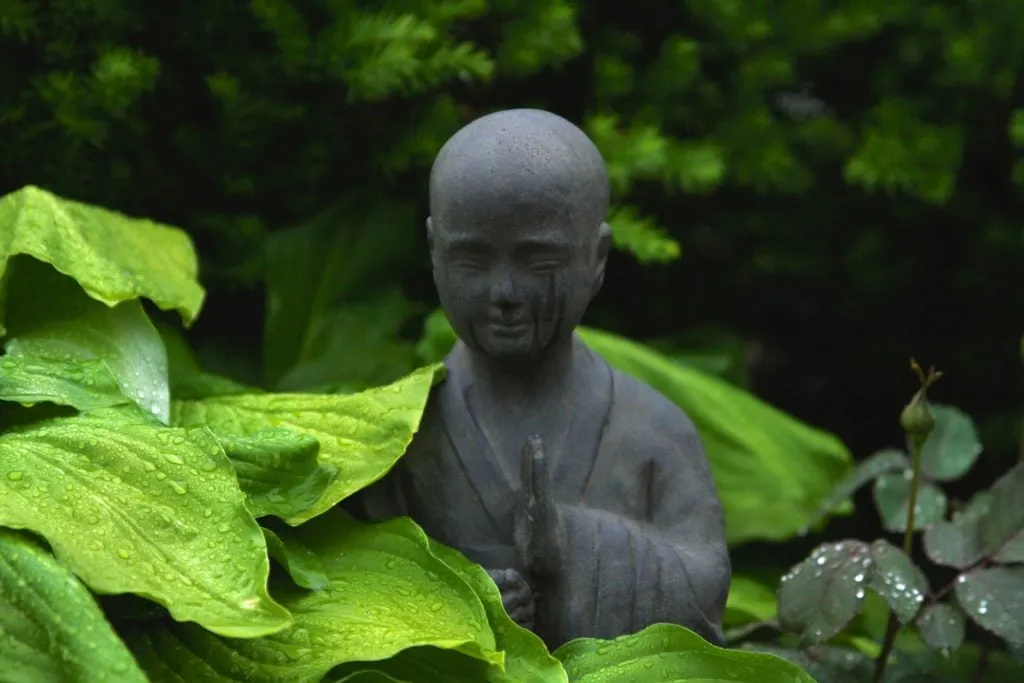 By @aflavell on Unsplash
To clarify this concept I’d like to use one Junichiko Tanizaki’s extract: “There is, perhaps, in the eastern people, an inclination to accept the limits and the circumstances of life. We resign ourselves in the shade, as it is, without revulsion. The light is soft? We let the darkness swallow us, and we find them a beauty. In contrast, the western people believe in progress, and they want to change their status. It passed from candle to oil, from oil to gas, from gas to electricity, chasing a clarity that wins every parcel of shadow”. We understand now that the Japanese sensibility for dark places, where the man stays for the garden contemplation, makes more appreciable the external places, trough the contrast of color and brightness, as a principle of exaltation by difference.
Looking for the contrasts within the same components of the garden, we realize that nature flows with asymmetric criteria, ensuring two-elements-relations never equal, leading to different contrast intensities between the physical elements in the scene; among plants and rocks, plants and gravel, fences and plants, water and rocks, in terms of color, shape, texture, material. Therefore we can find tall trees just next to low shrubs, rocks next to the water, small reeds near the path. We can also find antithesis on the figurative plan, the sea of gravel, ideal transposition of eternity, is the main element of the dry garden, as a symbol of the meditative life in Zen philosophy, is opposed to the rocky massif elements, the symbol of earthly life and material. The gravelly carpet creates also a tactile contrast in the mind of the observer, between the scope of representation (liquidity of the Sea) and its representation (roughness of gravel). The time issue, with the season changings, contributes to a further range of images between the different moments the garden is observed from the same position, for color variations and mobility of the elements that run a dynamic role, as the cyclical life of the leaves. But the spatial macro-contrast concerns the relationship between emptiness and fullness, always in favor of the void. The juxtaposition of the elements in the scene take place according to instinctive criteria. Reversing the predominant size of adjacent elements looking for a harmonious composition in the logic of asymmetry, where you find a balance between visual and proportional masses and distances. It may follow an empirical relationship of the type MxD = C (M is the mass psychological of the object, D its distance from the fulcrum, real or imaginary, of the garden, and the C constant depends on the size of the area). The infinity of the natural variables provides singular solutions and always new, an unlimited reservoir of events for the uniqueness of a lens, as Isamu Noguchi said: “I’m always looking for new way to say the same thing.”.
Intending to understand the relationship with the viewer, we return to the Ryoan-ji garden in Kyoto, where the compactness of the garden lives a paradox: a pure form, easily drawing by the mind, like a rectangle, can not be captured by the eye at once, and at least one element inside the gravelly border remains hidden for a ingenious perspective game, changing the point of view. Instead, miniaturization (Shukkei) creates psychological contrasts in the viewer, used to see the same element with different dimensions. The garden has boundaries clearly defined and consists of well defined objects, but within its limits it flows. The abandon happens inside the viewer’s mind, and it triggers an individual experience. The Garden as a dynamic stage, also determined by the difference of height between the veranda (engawa) and the outside surface, becomes the place of the suspension of the language. The resting of the thought, where a decentralizing force and the pluralism of grandstanding do not follow just one way and the continuous changing of psychological events, in relation to the way each one perceives that particular place at that particular moment, causes a continuous change trough the time. The contrast becomes perceptual stimulus of attention, which requires the active presence of the observer to the spectacle of the garden, with contrasting flavors that achieve harmony for complementarity and it is hard to immortalize it with words.
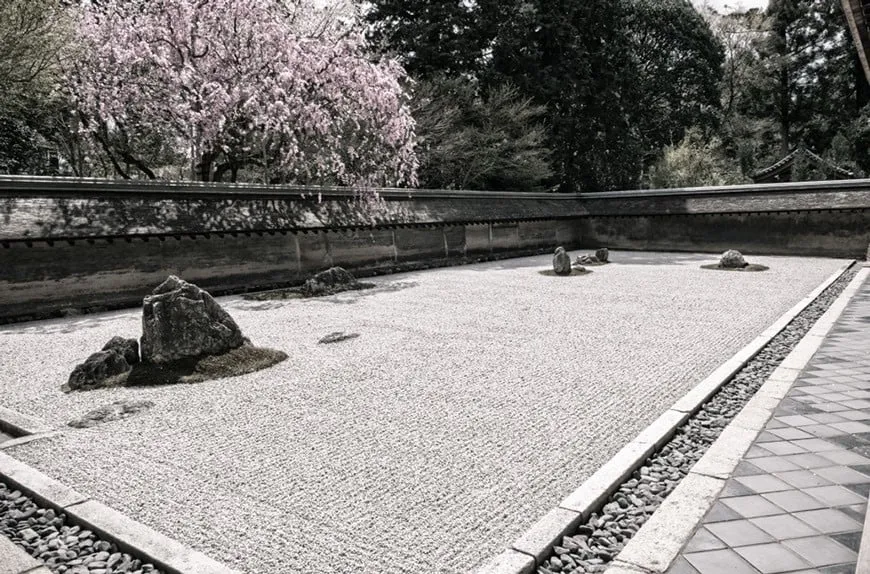 By @pepe_nero on Unsplash