Architecture, Video Games, and Storytelling
Riccardo Bartali · · Automatically translated from Italian
From October 8th to 11th, the Internet Festival, now in its 5th edition, was held within the walls of Pisa. The three days were packed with presentations, workshops, and pavilions, and among these, on October 10th, there was a workshop titled “Architecture and Scenography: The Emerging Narrative of Spaces,” led by Dario D’Ambra. The workshop aimed to explore the connections between video games and architecture, offering insights for conscious and enriching design. Architecture inherently possesses a narrative quality that is best expressed in the discipline of scenography: the design of spaces that primarily have the ability to tell a story, or, at the very least, to serve as a backdrop for it.
There’s a strong connection between architecture and video games, not just in the fact that there must be a design and an architect behind the magnificent structures we see on screen in visually impressive games, but also in the very nature of architecture and the feelings and stories it allows to be generated and experienced by the user.
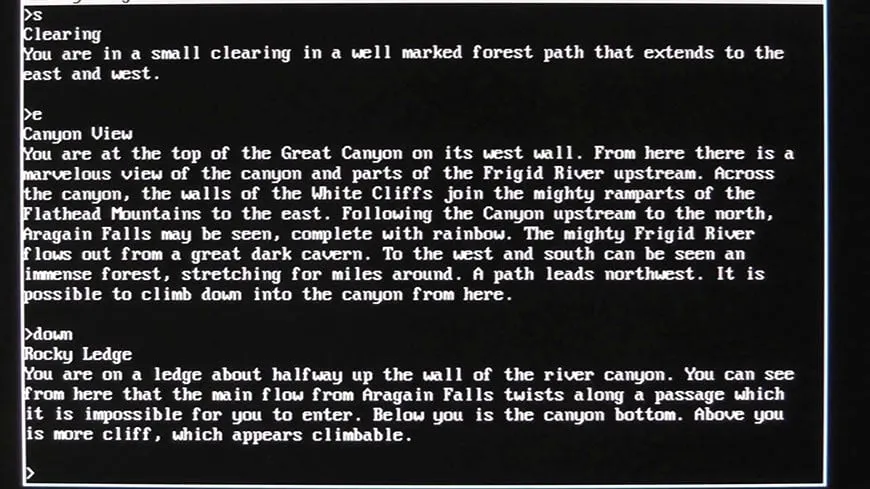
The need for a narrative within a video game came later than its inception. In 1958, William Higinbotham created a game called “Tennis for Two” to entertain visitors to the Brookhaven National Laboratory in New York (a nuclear research center), using a complex and expensive machine. Gradually, in the 1960s and 1970s, the first video games based on simple schemes began to spread, with simple plots and two-dimensional graphics that at most distinguished asteroids from enemy ships. Between 1977 and 1979, “Zork,” one of the ten most important video games in history, was written by Tim Anderson, Marc Blank, Bruce Daniels, and Dave Lebling, researchers at MIT. The plot began to become an essential element of any video game entertainment. In its uniqueness, Zork is the father of all role-playing games, but unlike Zelda or other modern titles, it has no graphics, only descriptive text with which the user interacts using commands such as “hit” or “north-west” to indicate the actions the character should perform. However, the step to visually represent the narrative is now very short: from here, graphic adventures like “Monkey Island” and role-playing games will emerge.
This creates a need for a narrative space within video games. In the virtual world, there are no limits to the possibilities of creating spaces. While in theaters, stage design is limited by the building’s structure, as well as human and financial resources, in the digital realm, the only obstacle is the capabilities of the hardware and software, and nowadays, there’s very little that can’t be done.
The architecture that is designed must therefore become the means by which the underlying story is enriched with details. The story is filled with architectures conceived solely to evoke: think of the park of Bomarzo, or amusement parks in general, like Disneyland, where every element is artificial and designed to evoke a fantastic story or a grotesque world in the observer’s mind. There was nothing new about this; it simply required an effort of abstraction and the transfer of certain concepts to the digital world.

The resulting discipline is environmental storytelling, which involves telling stories through spaces, adding qualities and elements that users can interpret to interact with and increase their engagement. A fundamental characteristic of every element is its “affordance.” Affordance refers to the physical quality of an object that suggests appropriate actions for a human to take in interacting with it: for example, a pitcher with its handle invites us to insert our hand into the loop to facilitate pouring the water we have filled it with, guided by its empty and flared shape. Through affordances, objects suggest to the player the actions to take to progress in the game, and the plot is enriched with details (a knife on the ground is a prop suggesting a crime). Denying affordances can lead to misunderstandings, which are often used to enrich the environment with different stimuli and interpretations.
There are various types of environmental storytelling to suit different video game needs:
- Evocative. An object reminds me of another, separate story. A puma and a bear are quickly associated with “The Jungle Book” wherever they are found.
- Descriptive. The elements of the scene do not tell a story; instead, they serve as a subtle background narrative.
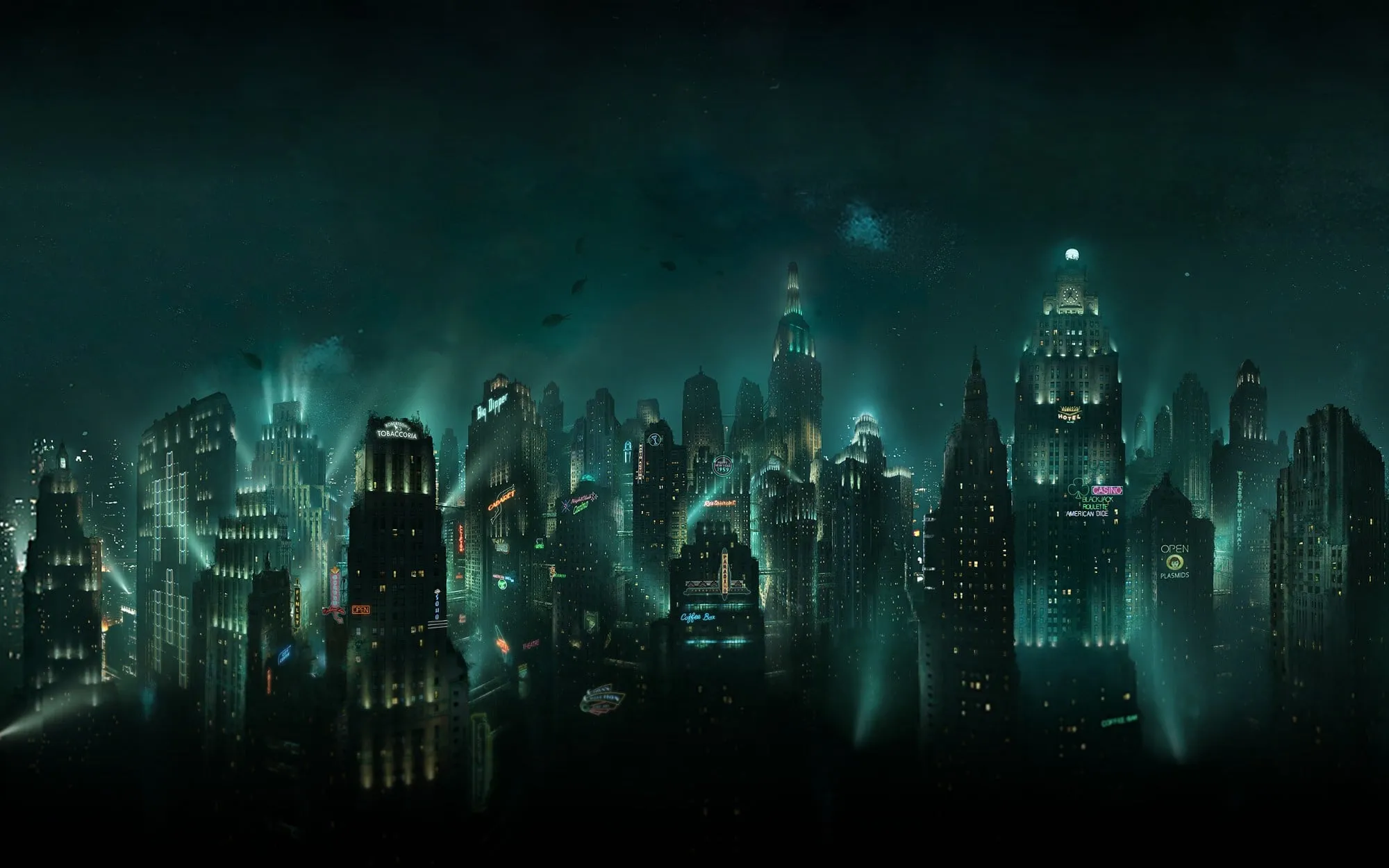
- Embedded elements: The environment, with its objects, provides clues about the plot. The player then pieces together supplementary elements of the narrative. In BioShock, a 2007 game developed by Irrational Games, the scenes of destruction in the city of Rapture offer significant insights into what happened in the city before the protagonist’s arrival.
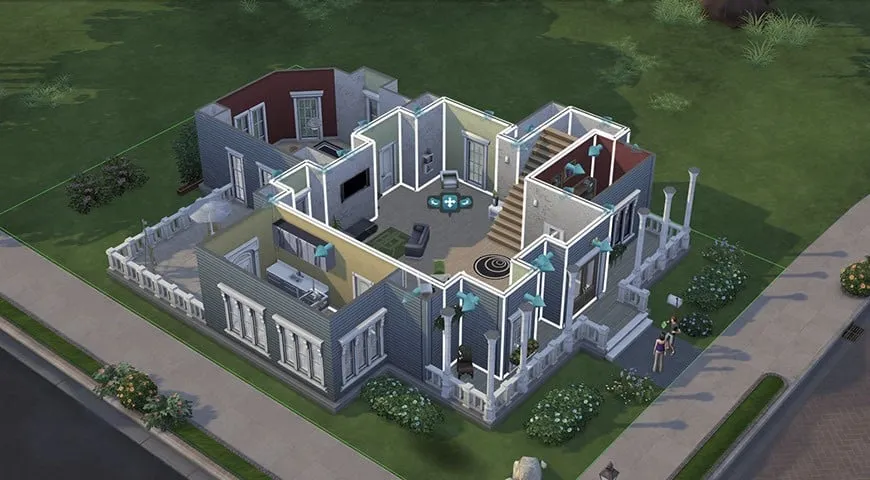
- Emergent Gameplay: The narrative unfolds according to the user’s specific desires. In simulation games like The Sims, the player determines who does what with whom.
To create a narrative that goes beyond words, it’s necessary to structure the space in a way that is engaging. Therefore, certain principles are essential for the design process. These principles can be drawn from Kevin Lynch’s analysis of the city, as presented in his book “The Image of the City.” It is crucial that objects have a recognizable identity that allows them to be distinguished from other elements, a structure that implies relationships between the elements themselves, and finally, a meaning that gives the objects a purpose. The space must be coherent and homogeneous, so that its use is not frustrating, and its various aspects should be linear to avoid fundamental ambiguities. Furthermore, the design should follow the usual elements: pathways, nodes, and landmarks.
The principles of architectural design are always valid when constructing the space of a video game. The mechanics of virtual environment design provide some insights, and make us more aware of how, even in the physical world, architecture is a vast source of stories and inspiration, capable of evoking, through simple and carefully considered symbols, a rich and universally recognized narrative universe for the observer.
For more information on storytelling and video games, please visit www.maggese-games.com
Inside the article “The image of a game space” from October 22, 2015, you’ll find a summary of the topics discussed during Dario D’Ambra’s workshop at the Internet Festival.