Dolomites
· Automatically translated from Italian
Francesco Guerra
The photographic project about the Dolomites began, more or less by chance, in August 2014. I had organized, along with two friends, a backpacking trip through the entire Trentino-Alto Adige region, from which I wanted to create a short documentary about the experience, and, more importantly, a photographic travelogue, capturing the people, customs, and traditions of that region.
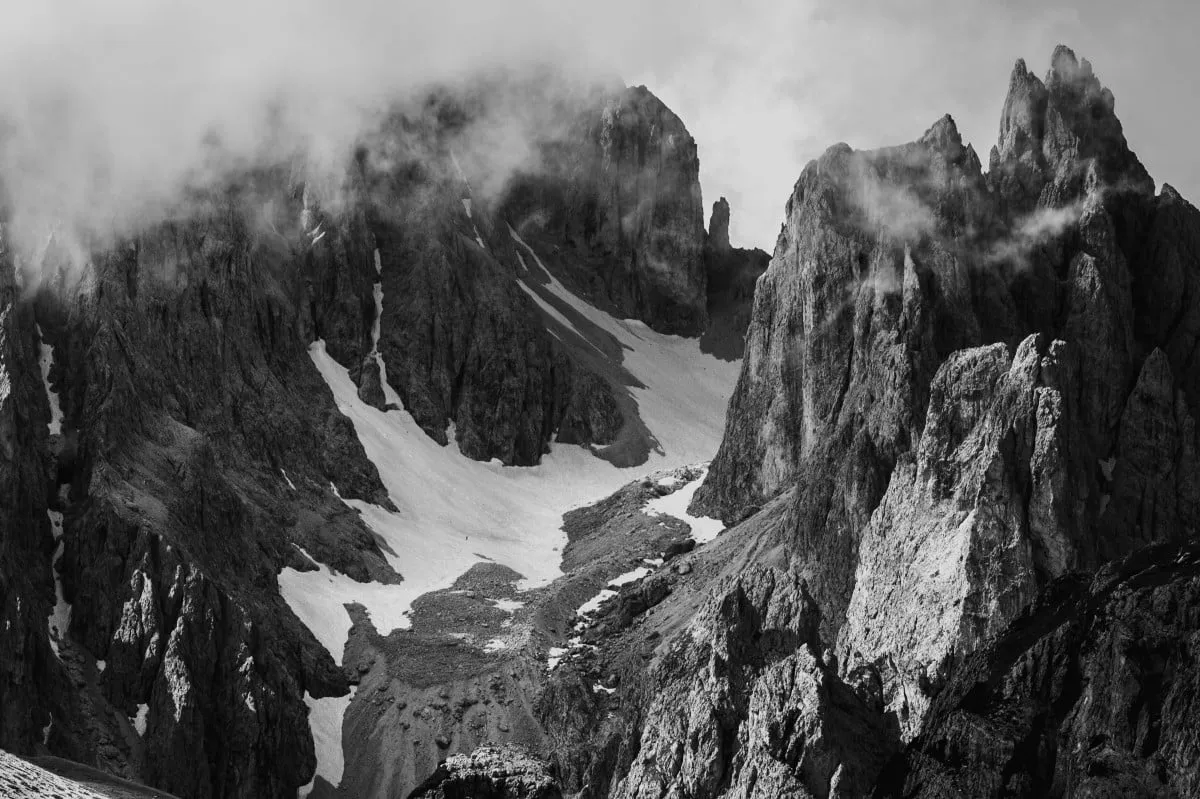
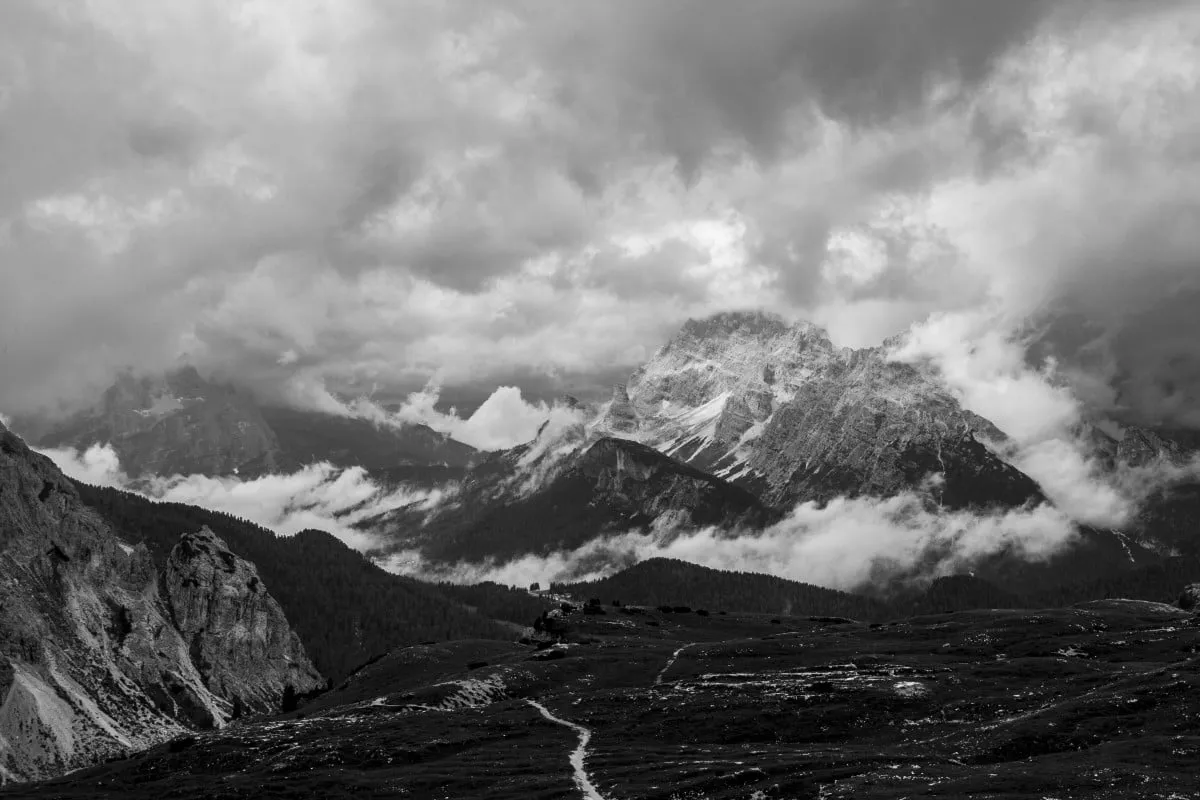
In the months leading up to the trip, I had delved into the work of the American photographer Ansel Adams, a pioneer of landscape photography, and I was completely captivated by it. I loved those black and white landscapes, where the attention wasn’t scattered among the various colors that nature offers, but was instead focused on the shapes of the mountains and the landscape, the lines that were created, the contrasts between light and shadow, and the fantastic perspectives offered by the wilderness.
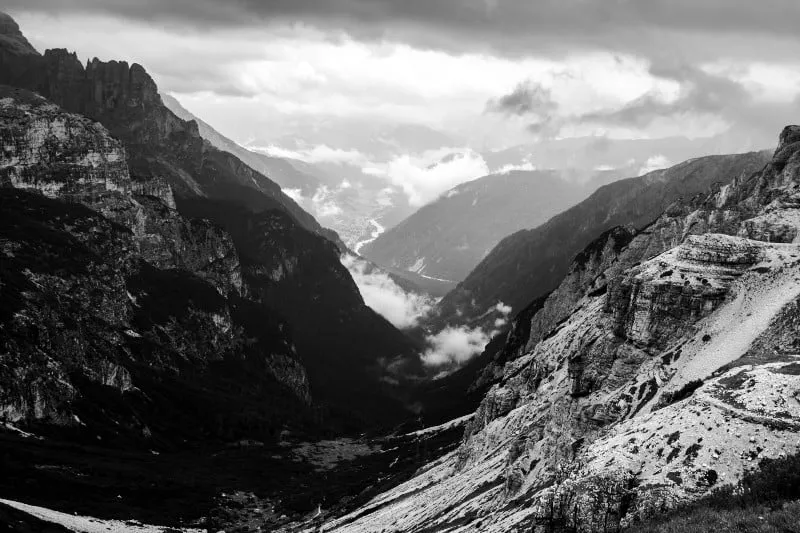
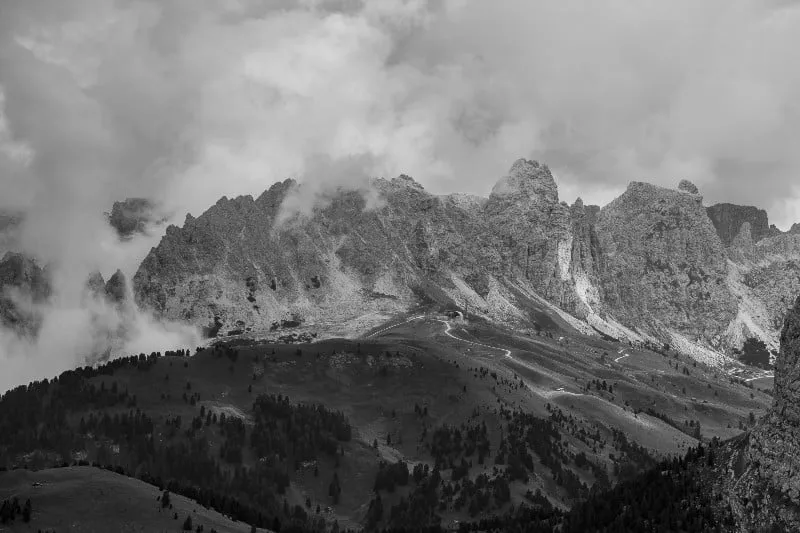
Upon reaching the summit of Latemar, the first peak I reached during the trip, I completely forgot about the travelogue I had planned. Captivated by the rugged beauty of those mountains, I decided to dedicate the entire trip to photographing them, searching for shapes, contrasts, symmetries, and, in some cases, with the help of the clouds, surreal landscapes.
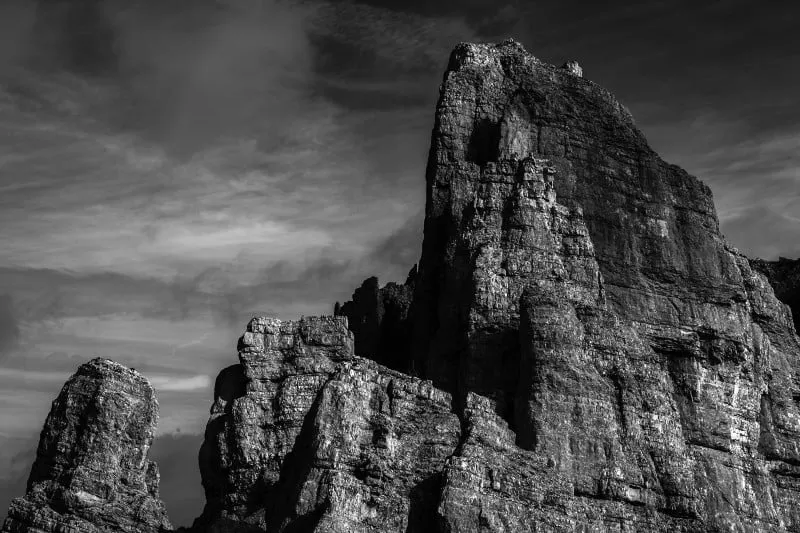
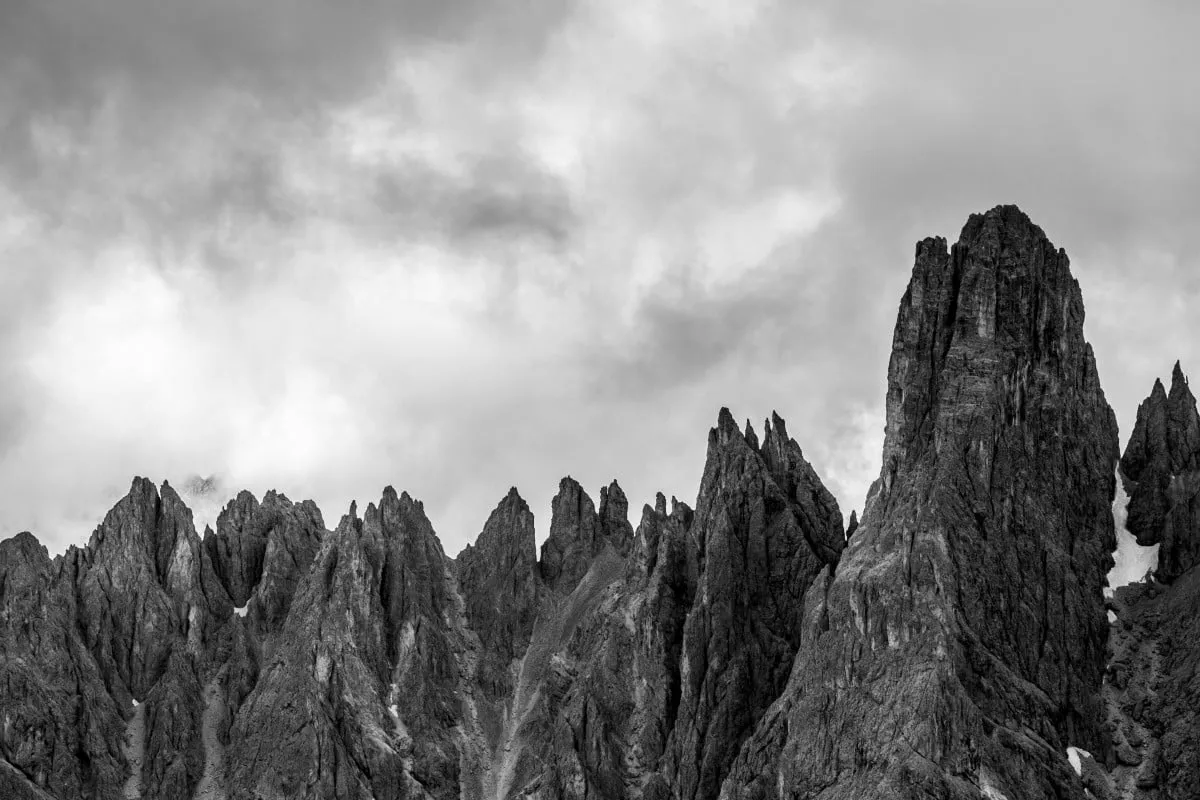
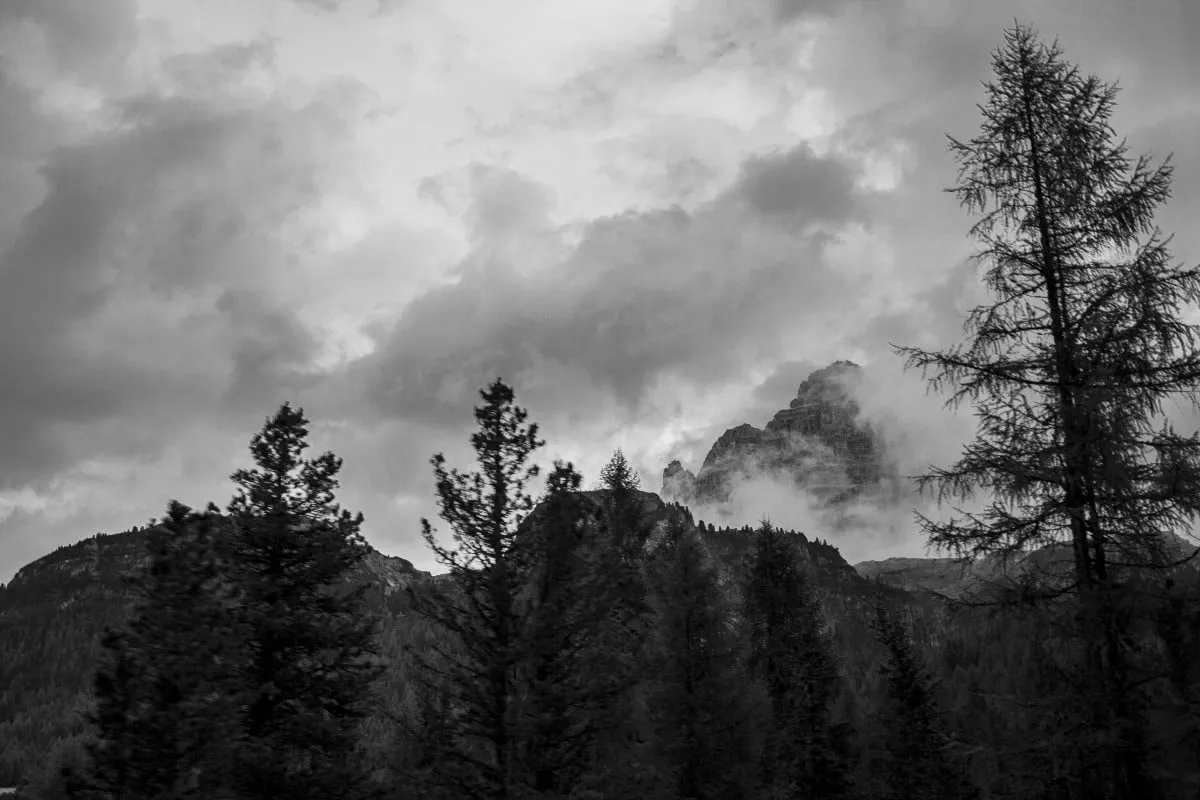
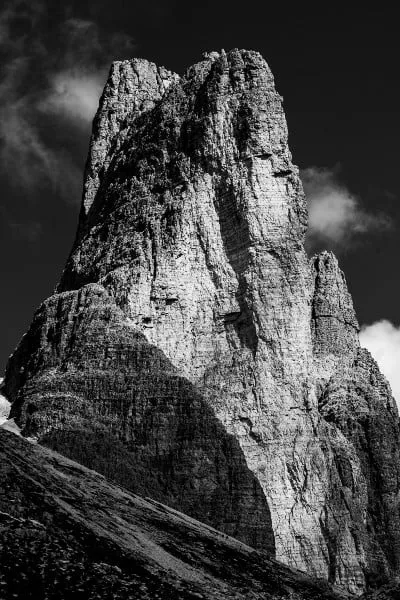
I chose black and white for three main reasons. The first, the most obvious, was to pay homage to the photographer who inspired me for this project, Ansel Adams, and to try to put into practice what I had learned in the months leading up to it. The second reason I chose to eliminate color is related to an idea that slowly grew within me as I was photographing. I believe that color certainly has its own expressive power, but in some cases, I think it distracts the viewer from the message that a photograph intends to convey, distracting them too much with the different tones. With black and white, I chose to focus more on light and shadow, on the contrasts they create on the mountains, as in the first photo of the series, and on the shapes and perspective they form, as in the fourth photo of the series, which I jokingly call “the electrocardiogram,” due to the configuration of those mountain ridges. Furthermore, at least from my personal point of view, black and white evokes sensations and touches inner chords that colors often fail to reach. The third and final reason is personal. The first five photos were taken using a zoom telephoto lens, a lens that I don’t actually use very often. I chose this lens because I wanted to get closer to those mountains; I wanted to become one with them. To do so, I had to exclude most of the surrounding landscape, allowing me to focus only on what most interested me. For the other five photos, I chose to use a zoom wide-angle lens, preferring the vastness of the spaces and, in some cases, the surreal touch that the clouds (which were omnipresent throughout my journey) provided.
In conclusion, the “Dolomites” project is indeed a landscape photography project, but I can say that I put myself into those shots, and in a more or less veiled way, each of the ten photos represents me.