Form, Formal, Formalism
· Automatically translated from Italian
Maria Teresa Bartalena
I intend to address the “Formal Form Formalism” concept, which deals with the ideas of form and formalism. As someone outside the field of architectural studies, I certainly don’t claim to fully understand what this means within your specific context. However, I thought it would be a good idea to draw on my – admittedly modest – knowledge in the field of law, and with a brief overview of some theories of legal philosophy, without going into detail or providing an exhaustive description, to offer you some food for thought on how form is interpreted according to these theories.
Within the philosophy of law, there is a school of thought known as “legal formalism.” This has taken on various meanings over time, more accurately, different shades of meaning. The most immediate interpretation sees form as a way of representing the will of a class, a population, or an individual. A practical example is a contract: through it, the internal will is manifested externally, and in this way, and only in this way, it is possible to interact with other parties. This view, although quite simplistic, immediately highlights a function of form that I find very interesting: its ability to connect individuals.
Another aspect of legal formalism, and perhaps the most rigorous one, is the one that I wanted to bring to your attention: according to this conception, what is right is what conforms to the law, and what is wrong is what does not. In this sense, the law, as a formal construct, is elevated to a standard for distinguishing between what is right and what is wrong. While this may seem absurd and, in my opinion, can lead to unorthodox results, it allows us to have another understanding of form: it is what provides order.
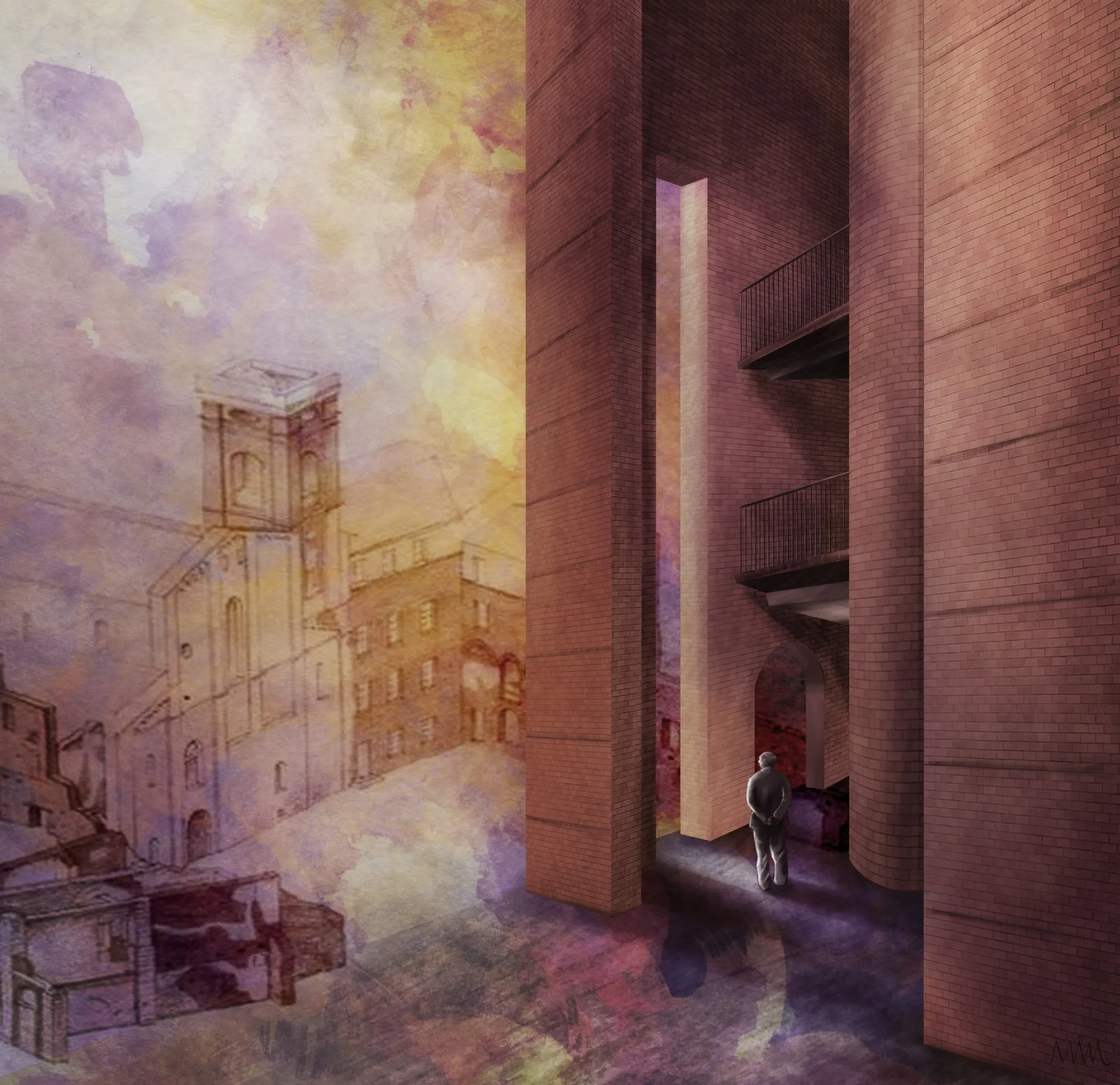
This brief, and incomplete, foray into legal concepts leads me to ask whether architecture might draw on these two ideas of form, so that it is not merely a neutral backdrop for things or buildings, but rather possesses inherent value. In this view, form would be what, by imposing order on the environment and the world, allows people to relate to each other, perhaps in a more harmonious way. In this way, the word “formal” would no longer be so negative, but would immediately evoke a concept of perfection, aggregation, and comedic balance. Am I perhaps dreaming?
Formal form, Formalism
I want to use my words to address a nagging issue that’s been bothering me for quite some time. I want to talk about a particular form, and all its variations, without which it seems impossible to construct a sentence that makes sense, or, even worse, a sentence that is structurally sound. When I hear it, my brain stops working, I feel a shiver run down my spine, and my mouth freezes in a forced smile.
First of all, I want to address the often-maligned “pure formal exercise,” which, in simple terms, means “I experiment with different forms, I tweak them a bit, and I see which one I like best.” Or, as some might say, “This is just pure formalism!” Yes, because “pure” is essential. Putting aside the jokes, I want to restore the dignity and importance that this concept deserves. One topic that I find extremely stimulating in this regard is the connection between form, functionality, and beauty. But that will be explored in more detail in the next installment.
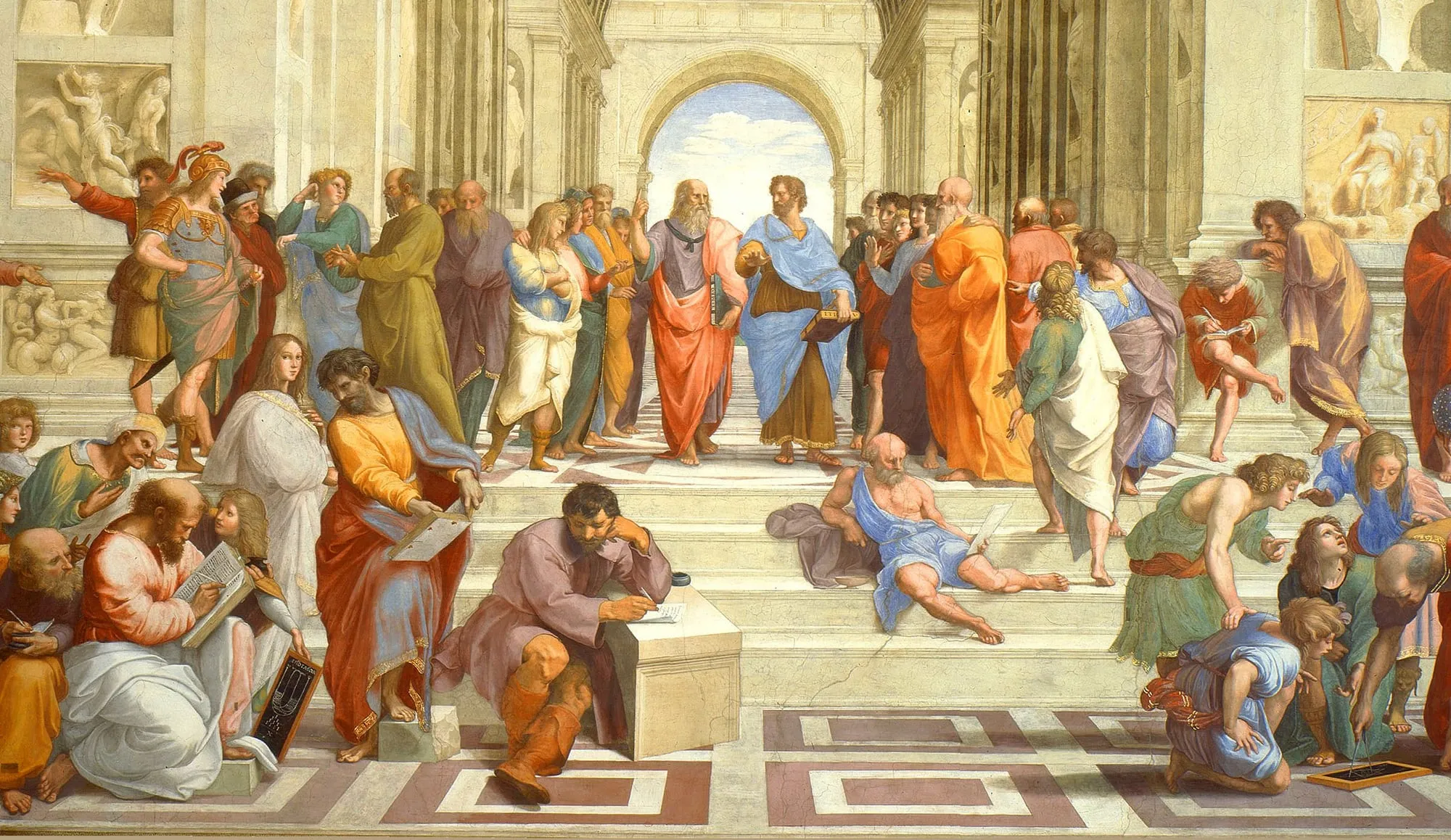
On the cover, “The School of Athens” by Raphael, a fresco measuring approximately 770 x 500 cm, painted between 1509 and 1510, located in the Stanza della Segnatura, within the Vatican Palaces, Vatican City.