Gibellina Nuova
Andrea Crudeli · · Automatically translated from Italian
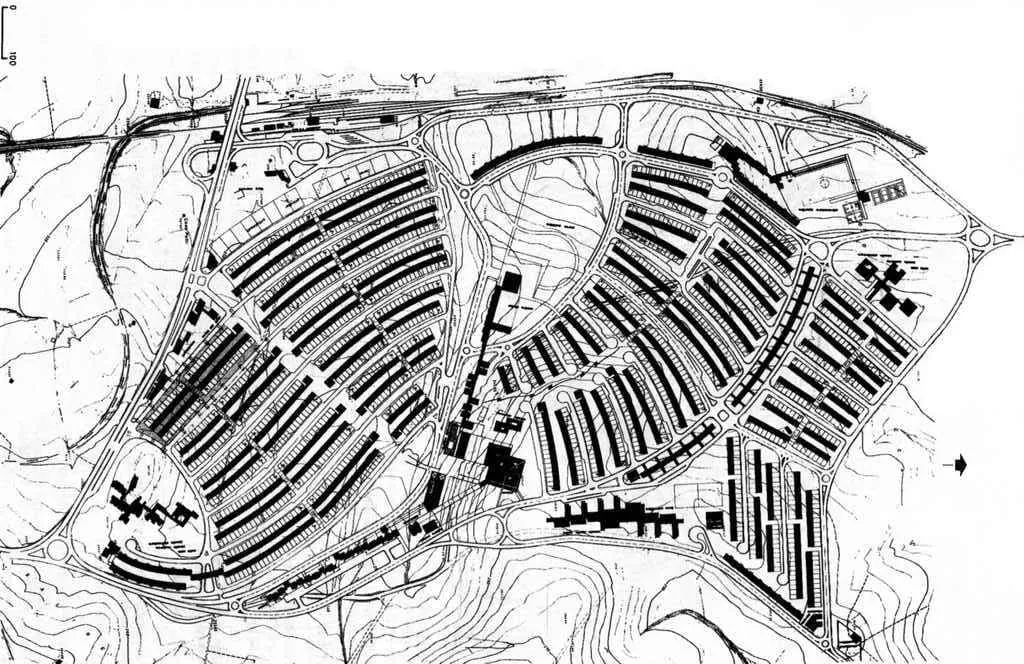
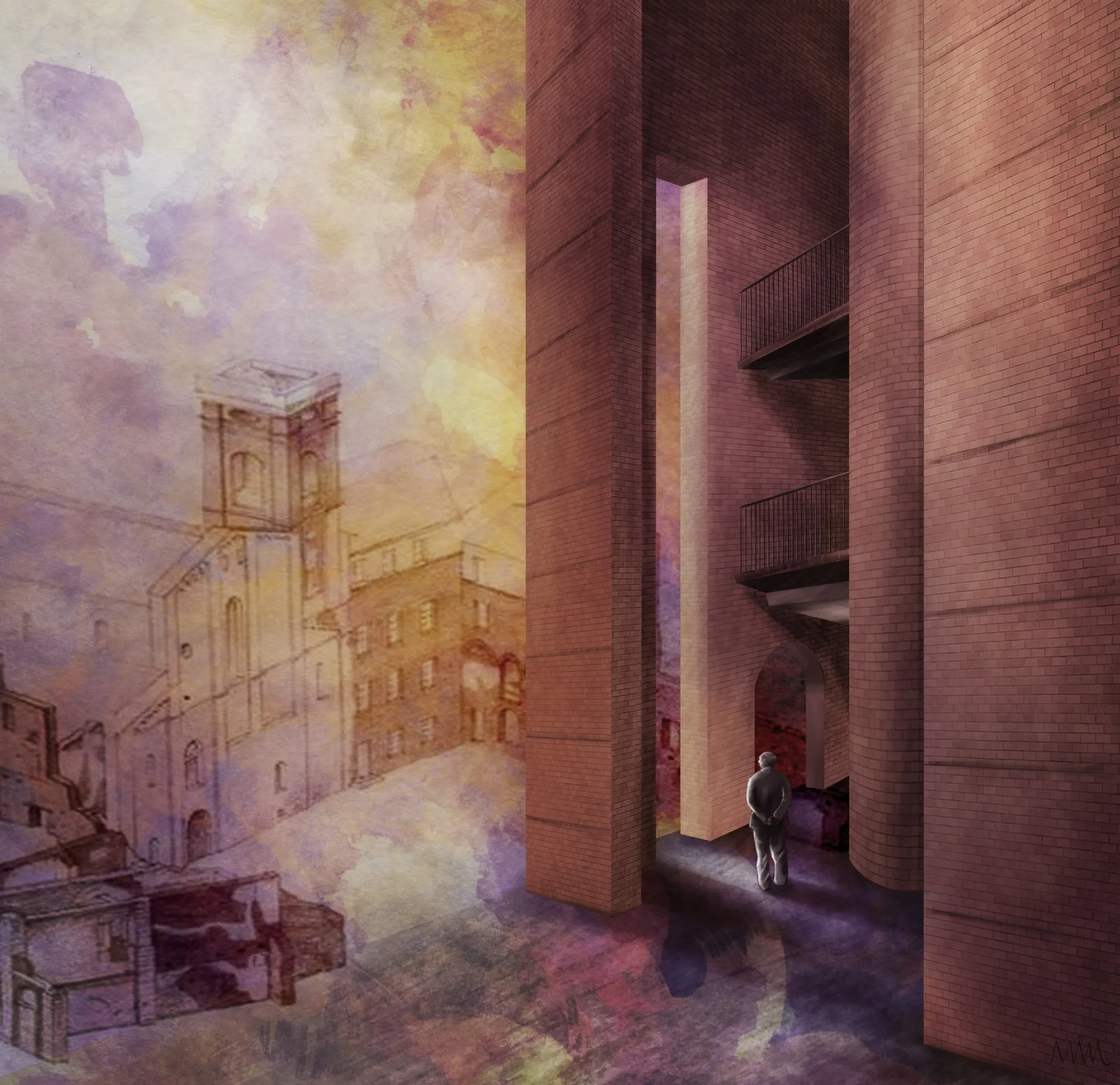
On the night of January 14-15, 1968, the town of Gibellina was destroyed by the Belice earthquake, which struck a large part of western Sicily. In the face of the devastation caused by the earthquake, which reduced most of the town to rubble, the chosen strategy was to build a new city near the highway under construction, about twenty kilometers away, with the intention of maximizing new economic growth. The remains of the old Gibellina were entrusted to the artist Alberto Burri, who conceived of a monumental work on an urban scale, covering the rubble with a layer of cement and crystallizing the imprint of the old town in a concrete form. The design for New Gibellina was entrusted to Marcello Fabbri, who, inspired by the Anglo-Saxon “new town” models and contemporary debates on urban planning experiments, designed a highly expansive layout, popularly known as a “butterfly wing” design. Despite being intended for the same number of residents, its area was approximately ten times larger than that of the previous town.
The spaces are expanded, and the dwellings are distanced from each other to prevent, in the event of a collapse, the involvement of adjacent buildings. The roads are designed to allow easy passage for emergency vehicles. Furthermore, a series of artistic and architectural interventions are implemented throughout the urban fabric. These works, if removed from their context, could be seen as experimentally appealing objects, but from an urban planning perspective, they are disconnected and lack any sense of belonging to the place. They are foreign bodies, floating within their surroundings.
The effort made proves ineffective, and over time, the reconstruction strategy reveals so many critical flaws that it triggers a slow process of abandonment of the city center. Currently, approximately 30% of the dwellings in Gibellina are second homes, while 20% are uninhabited.
The area designated as the city center now resembles a deserted periphery, where the main squares have been transformed into soccer fields, and the wide sidewalks intended for residents’ walks have become roads for vehicles.
The main oversight lies in the issue of sunlight, namely, the fact that the urban density of the original layout would have created continuous shaded areas where people could find shelter during the hottest months. The new, detached dwellings have fragmented the shade, and even the spaces specifically designed for public activities have proven to lack adequate protection from sunlight, thus discouraging social interaction among residents.
Following the earthquake that struck the Belice Valley, what remains of the old city is its memory. The reconstruction, in fact, has failed to grasp the deeper meaning of Gibellina and the true cultural heritage that should be preserved, resulting in a ghost town devoid of the unique character that once defined it.