Italian cinema: The years of Fascism
· Automatically translated from Italian
Gemma Salvadori
Continuing from “Between Materiality and Invention: The Environment in Silent Cinema“.
During the Fascist period, the Italian landscape became the subject of propagandistic reconstructions by filmmakers at the Istituto Luce. Under the regime, a vast quantity of documentaries were produced, in which the Duce was the central figure, either present or evoked by the narration. In fictional cinema, as in the silent era, interiors and urban life continued to dominate the screen. The regime’s cinema presented the public with a new landscape, that of a country extending beyond the Mediterranean.
Documentary films in the silent cinema of the Ventennio (the Fascist era) completely took on the form of propaganda. The filmmakers at the Istituto Luce filmed Italy.
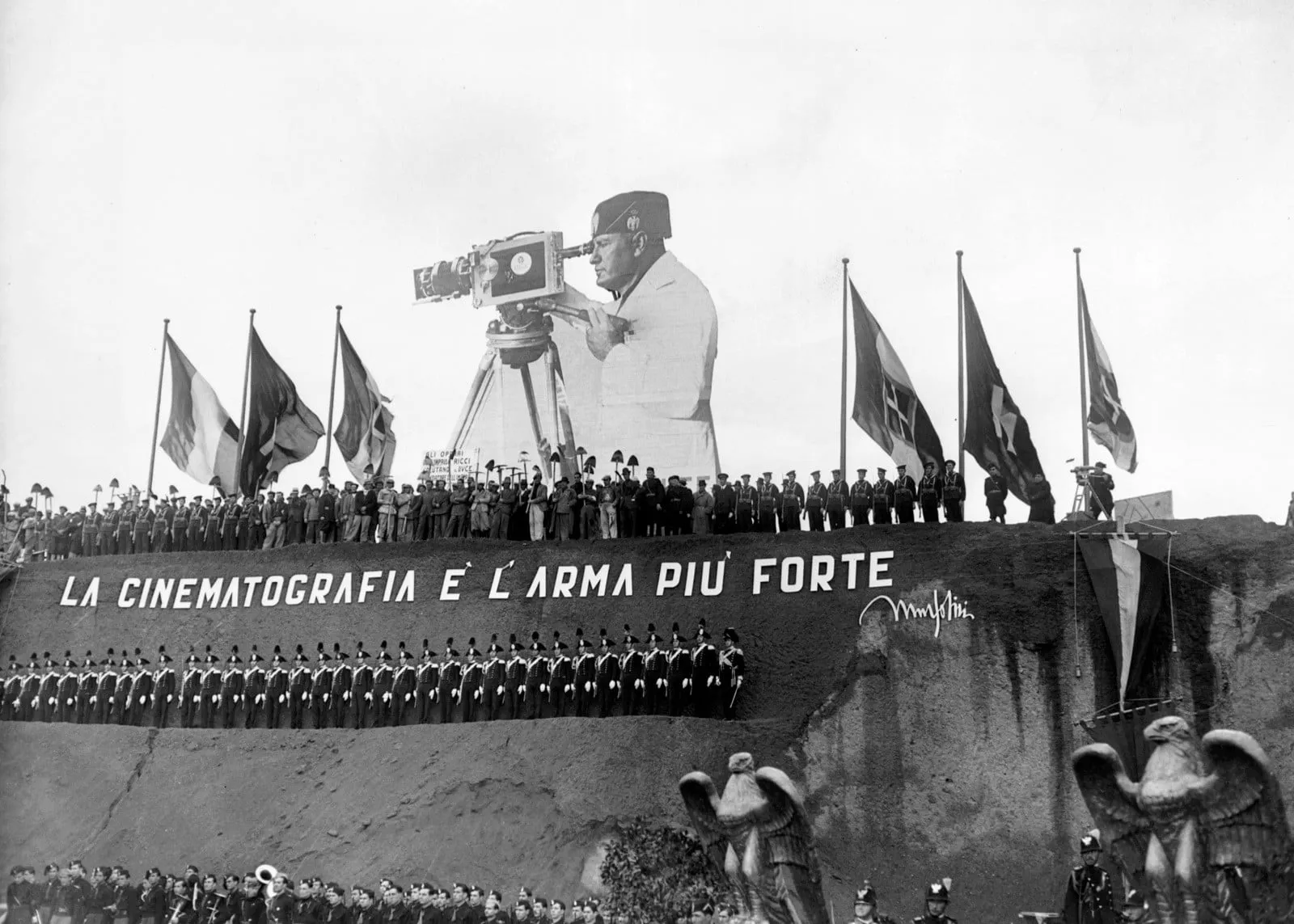
The Istituto Nazionale Luce was established by Mussolini, with the essential purpose of “promoting popular culture and general education through the distribution of films at the lowest possible price, and distributed for charitable purposes and national patriotic propaganda.” (Article 1, decree law no. 1985 of November 5, 1925).
The project, which involved Mussolini’s supervision of the materials produced, aimed to create a visual monument to the Fascist era, placing the ever-present figure of the Duce within the urban and rural landscape. The next step in this campaign of propaganda, education, and information through images came with decree law no. 1000 on April 3, 1926, which made it mandatory to screen one or more Istituto Luce documentaries before every film screening.
In 1937, the Cinecittà studios and the Centro Sperimentale di Cinematografia (Experimental Film Center) were founded in Rome, the most famous Italian film school, which is still operating today.
In terms of aesthetics and themes, propaganda cinema promoted the model of the heroic and the virile, both elements that celebrated the regime and its ideals.
It’s strange, and we’ve noticed this before, that in a country with a predominantly rural character like ours, where the agricultural sector employs fifty percent of the population, our filmmakers seem unable to naturally portray the countryside. It appears that none of them are familiar with real fields or authentic farmers. [1]
The direct involvement of Fascist cinema in the field of filmmaking becomes clearer when we talk about war. During and around the world conflict, propaganda activities intensified, and production also included semi-documentary films by Francesco de Robertis (Uomini sul fondo, 1941; Alfa Tau!, 1942) and Roberto Rossellini (La nave bianca, 1942, with De Robertis; Un pilota ritorna, 1942; L’uomo della croce, 1943). In the first of these, despite the clear militaristic attitude, the tone seems to focus on an apolitical action centered on individuals, while the second already hints at the linguistic style that would later be seen in Rossellini’s Roma città aperta (1945).
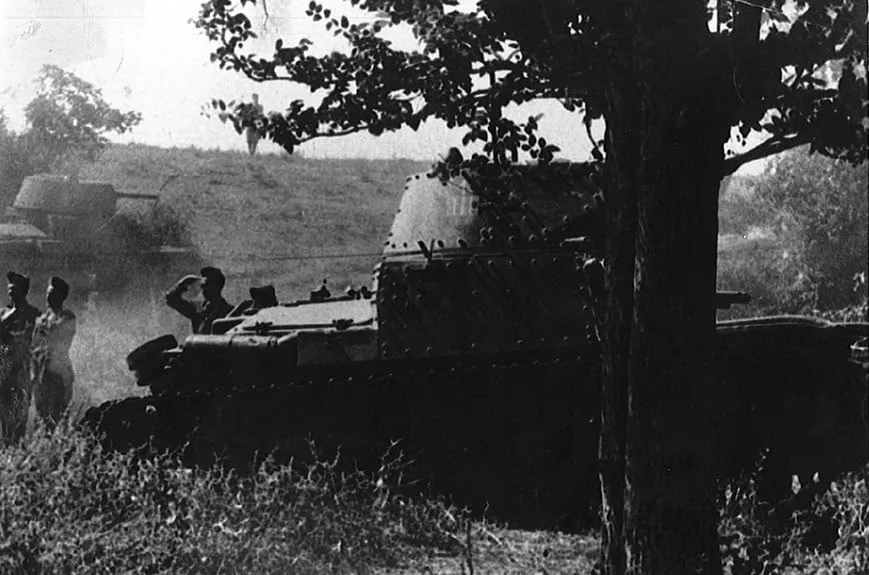
But even from the call to arms in 1936, with the opportunity to film in Africa, cinema had responded with Mario Camerini, The Great Call, and Augusto Genina, White Squadron: both, in their spectacular use of the African landscape, seem to be looking to American cinema.
Joining them were: Under the Cross of the South (1938) by Guido Brignone, which portrays Italian “civilization” in the African colonies through the fascist leitmotif of land reclamation and the condemnation of interracial relations; Luciano Serra, Pilot (1938), a film written by Rossellini with the son of the dictator; Little Castaways (1939) by Flavio Calzavara, where the backdrop of the Ethiopian War gives rise to a story of smugglers in the form of an adventure comic-strip film.
The colonial war cycle ends in 1942, when fascism is on the verge of disaster, with Giarabub by Goffredo Alessandrini, about the heroic resistance of the Libyan outpost of the same name, and Benghazi by Augusto Genina, which now shows the British occupation of the Cyrenaica region, a landscape that was once “Italian.”
Filmed at Cinecittà, they no longer have anything of the landscapes with which, through the American heroic-adventure genre, the directors had previously given the public the visual illusion of a country, still largely agricultural, that looked beyond the Mediterranean, believing in the criminal image of the Empire.
To be continued…
[1] P. Bianchi, “The Glass Eye: Cinema of the years 1940-1943,” Milan, Il Formichiere, 1978, p. 171
On the cover: Mussolini lays the first stone for the new headquarters of the Istituto Nazionale Luce in the Quadraro district. The scene is staged with a large portrait of Mussolini and a propaganda slogan reading “Cinema is the most powerful weapon,” set up for the inauguration ceremony of the new headquarters of the Istituto Nazionale Luce – date: November 10, 1937. © Istituto Luce