Between materiality and invention
· Automatically translated from Italian
By Gemma Salvadori
In silent film, the depiction of landscapes evolved after an initial pioneering phase inspired by Italian views, developing along two main spiritual currents. The first, rooted in historical memory, drew inspiration from Greek and Roman styles, emphasizing the need to recreate grand settings for a newly formed nation. The second saw the landscape dissolve within the bourgeois and aristocratic world, severing ties with the rural past and celebrating urban environments, as well as the interiors of fashionable apartments and villas.
It is precisely from this space, a direct representation of the profound transformations that link humanity and nature, that the technique of moving photography developed, along with the theory of “points of view.” The vision of the beauties of the Italian landscape, thanks to the cinematic device, became accessible to everyone, spreading a different awareness among the masses. Everything in this new art form seemed to be progressing well, successfully establishing itself in a market that would soon reach its saturation point.
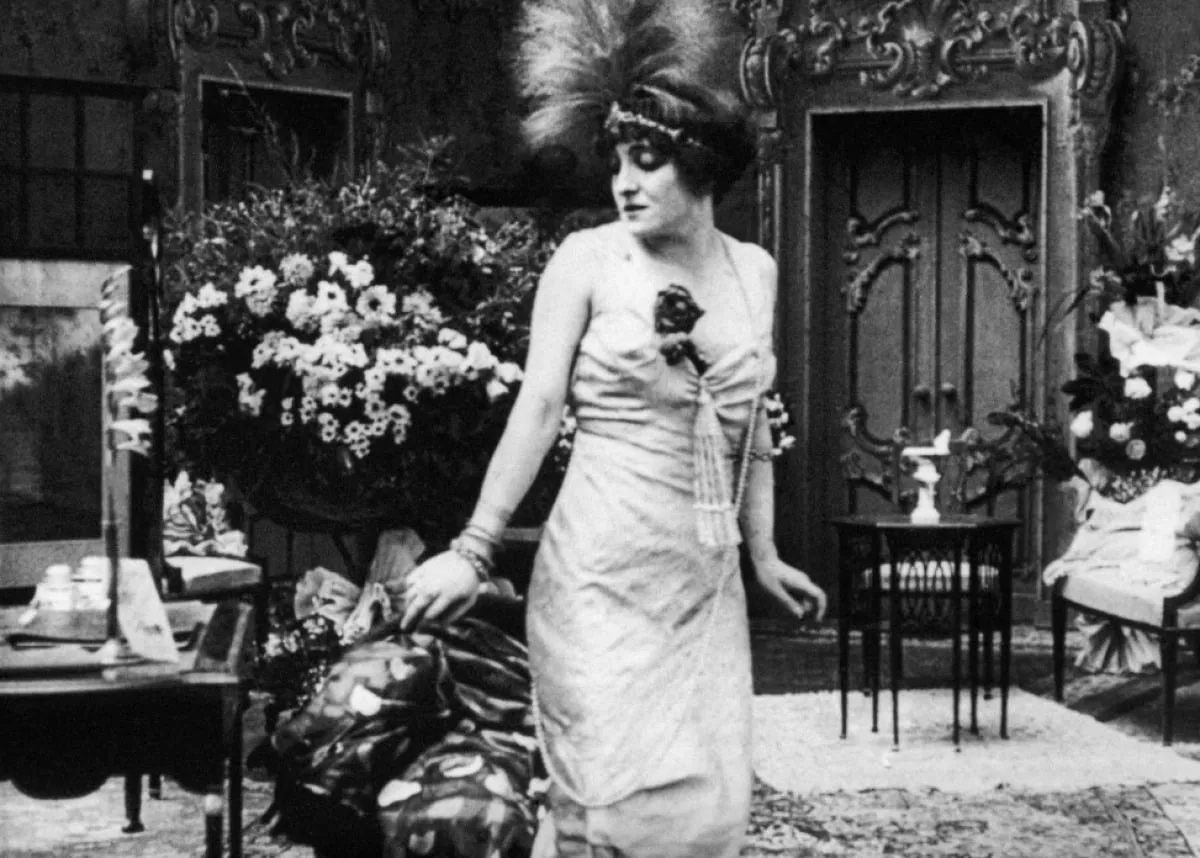
Audiences began to perceive the environment, previously only used for purely documentary purposes, as something “empty.” This revealed the need for a narrative capable of filling a scene that was now devoid of life. The reaction came in the early 1910s with two major production companies: “Diva Film” and historical mythological films, which resurrected Italian silent cinema from its ashes with unprecedented force, becoming an international reference point.
Thus, the landscape of cinema regained its new dimension. On the one hand, it allowed the domestic environment to inspire it (interior views, Art Nouveau bedrooms, and bourgeois living rooms). On the other hand, it was imbued with a historical and archaeological dimension, echoing a glorious Greco-Roman past. In the first case, the environment is ultimately consumed within a world that explicitly seeks to break away from a rural past in favor of an urban one. In the second case, there is a clear desire to reclaim this space, linking it to a distant time when myth was the foundational element of a new cultural imagination.
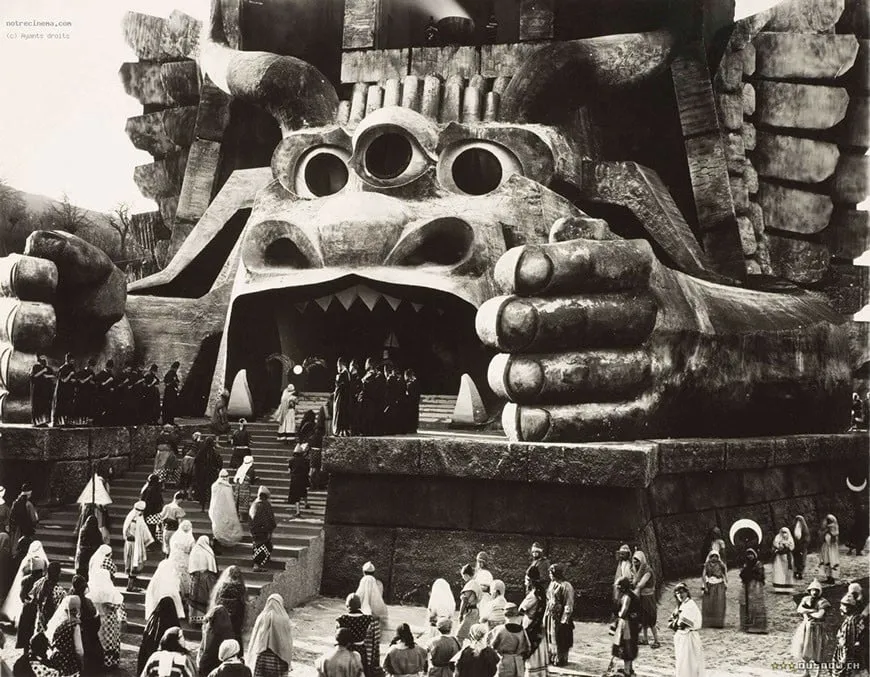
As the legendary names of Francesca Bertini and Lydia Borelli become more prominent, immersed in the visually striking settings inspired by D’Annunzio’s rhetoric, the historical-mythological cinema promotes the use of Italian landscapes as a means to amplify the power of the cinematic image. In 1914, Giovanni Pastrone released “Cabiria.” The film had a significant impact at the time, particularly in the United States, where it influenced directors such as D. W. Griffith. In this film, the landscape becomes a functional element, serving as a backdrop for the experimentation with elaborate sets and a reconstruction of the past.
At the outbreak of the war, the situation seemed not to change: patriotic films were made, refusing to acknowledge the reality of a country ravaged by war, unable to sustain the overwhelming war effort. However, after Caporetto and Vittorio Veneto, nothing was ever the same. The government’s censorship in 1915 reached extremely restrictive levels, attempting in vain to hide the desperate results of a paralyzing war of attrition. The social upheaval that followed November 4, 1918, in which the political and social control imposed by Mussolini had a disastrous impact on cinema, forcing it to conform to the regime’s agenda by presenting an imaginary and grotesque propaganda.
By the end of the 1920s, cinema entered the era of sound…