Architecture in Alfred Hitchcock’s films
· Automatically translated from Italian
Antonio M. Zenzaro
The stage setting is essential for establishing the narrative in a film, but not for Alfred Hitchcock. The English filmmaker, throughout his extensive filmography, elevated the stage to a generative element of the action; the architecture in his films is not merely a backdrop, but the creation of perfectly structured worlds, much like God and his universe. A decisive shift in the architectural aspect, achieved through substantial production budgets, is particularly evident in Hitchcock’s Hollywood period.
“Dial M for Murder” (1954) not only marks the beginning of his collaboration with Grace Kelly, but also sees the action almost entirely confined to a single building. Hitchcock deliberately designed the film to take place exclusively within the London home of the protagonists. The living room, designed by George James Hopkins, serves as the setting for the couple’s discussions, the murder, and the eventual arrest of the culprit. A crucial element is the curtain overlooking the internal garden, which allows the director to heighten the suspense at particularly tense moments.
The quintessential tense scene in the remake of “The Man Who Knew Too Much” (1956) takes place inside the Royal Albert Hall in London. The circular structure of the concert hall, a favorite of the Queen of England, becomes the perfect space for expanding the sense of time. In the chase sequence, filmed from multiple angles among the velvet armchairs, the director uses the space to build suspense by juxtaposing the faces of James Stewart, Doris Day, the killer, and the orchestra members. In this way, thanks to the setting, Hitchcock makes the narrative time longer than the actual time of the story.
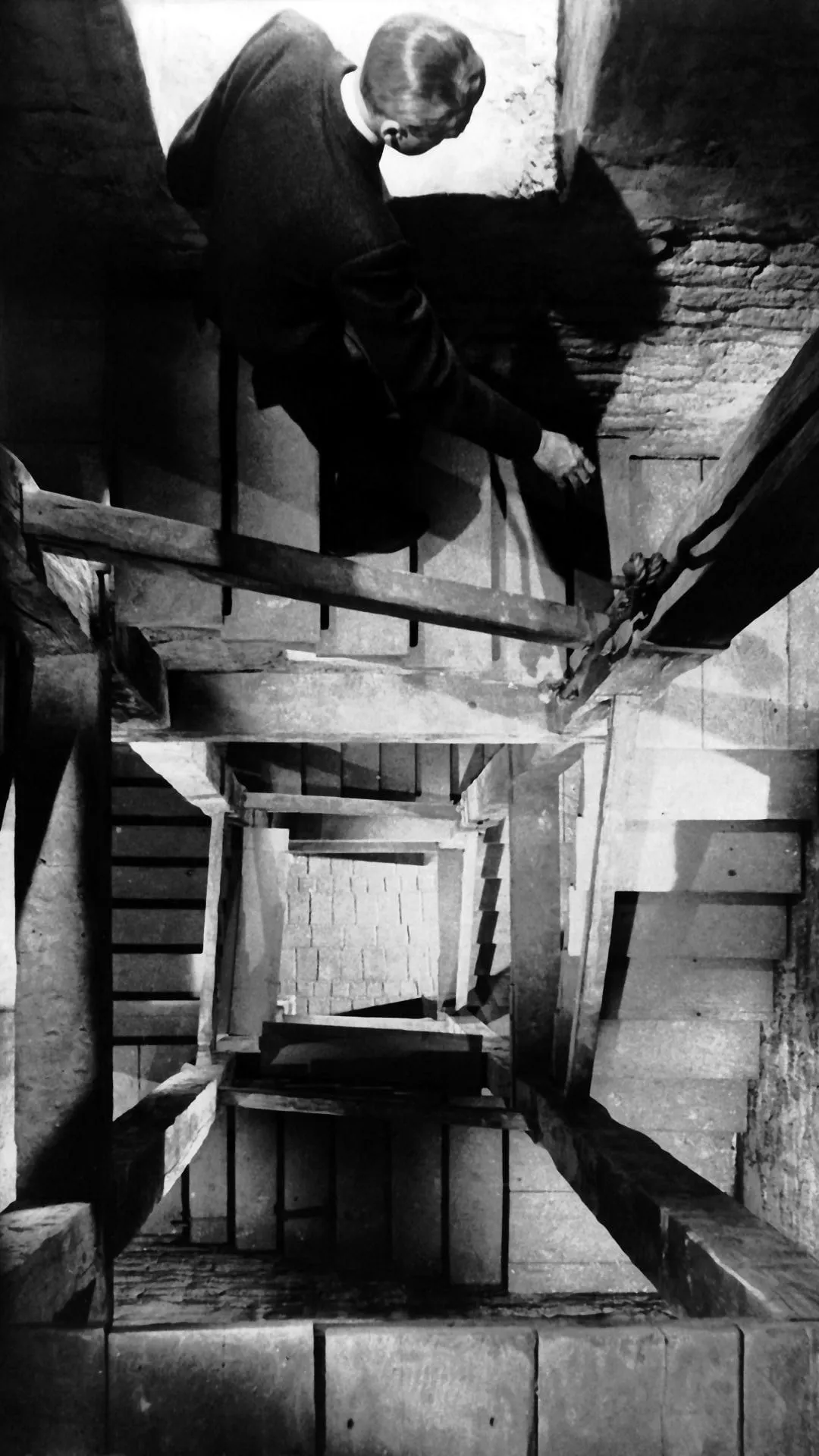 The Woman Who Lived Twice (Vertigo, 1958)
“Rear Window” (1958) is considered a masterpiece of Hitchcock’s filmography. The theme of vertigo is explored through a series of key architectural elements that are repeated throughout the film. First, almost at the beginning of the film, the Golden Gate Bridge serves as a backdrop for Madeleine’s first suicide attempt; the famous San Francisco bridge embodies the feeling of death that permeates the film. The roofs, gutters, and especially the staircases become the protagonist’s greatest phobia. The character of Scottie repeatedly encounters these elements, and in the final sequence, in the bell tower, the feeling of vertigo is crucial in relation to the architectural symbol.
“North by Northwest” (1958) is a film shot almost entirely on location; in this case, Hitchcock does not forgo incorporating significant architectural elements for purely aesthetic reasons and to further enhance the narrative. In this film, one can admire a faithful reproduction, both externally and in the interior furnishings, of Frank Lloyd Wright’s “Fallingwater” house; the Kaufman family, owners of the original building, did not grant permission for the filming. Furthermore, Hitchcock placed the famous American architect’s house almost next to the Mount Rushmore National Monument to emphasize the relationship between architecture, nature, and space within the language of cinema.
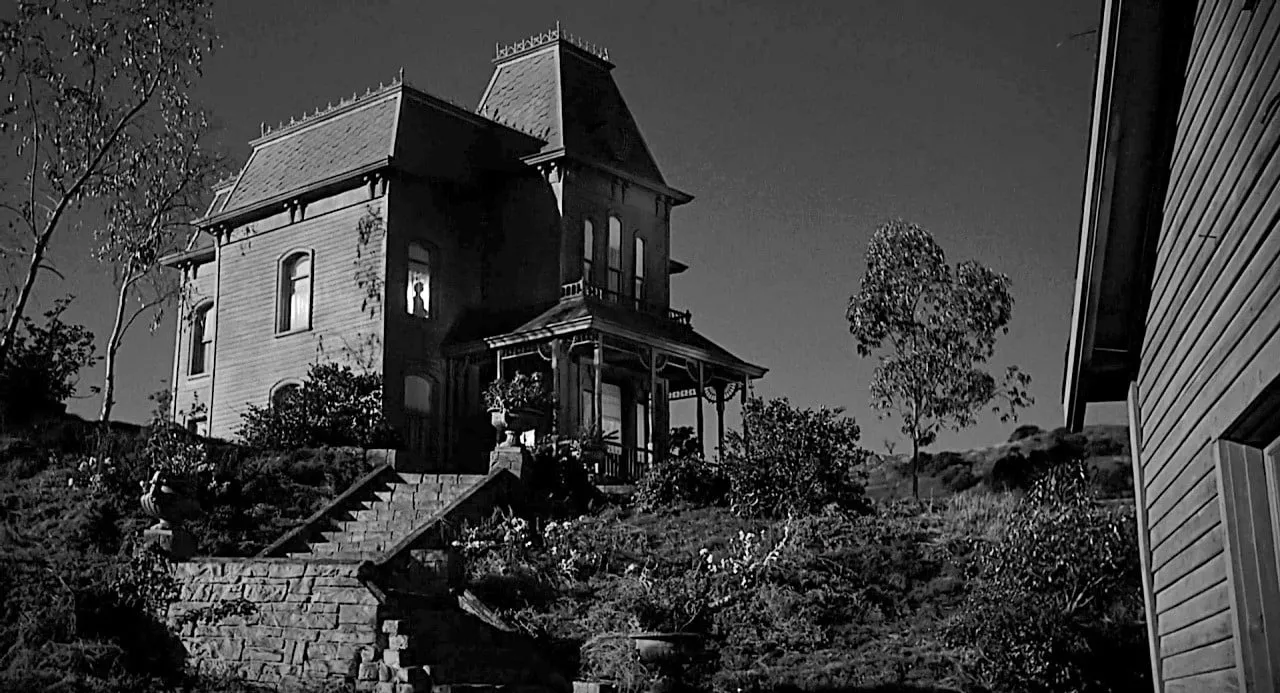 Psycho (1960)
“Psycho” (1960) is another notable example where architecture plays a starring role alongside the actors. After Marion arrives at the Bates Motel, the film unfolds primarily within the rooms of the modest hotel and the house on the hill owned by the disturbed Norman. From the very first shots, the motel is depicted as a place of unease and mystery; the absence of guests, the taxidermied animals, and its owner all contribute to making it the perfect setting for the murder that occurs midway through the film. At the same time, the Victorian house on the hill is designed to be the origin of the evil that afflicts the protagonist; its austere and solitary nature, always framed from below, gives the place a sense of complete autonomy, making it feel alive and capable of shaping those who live within it.
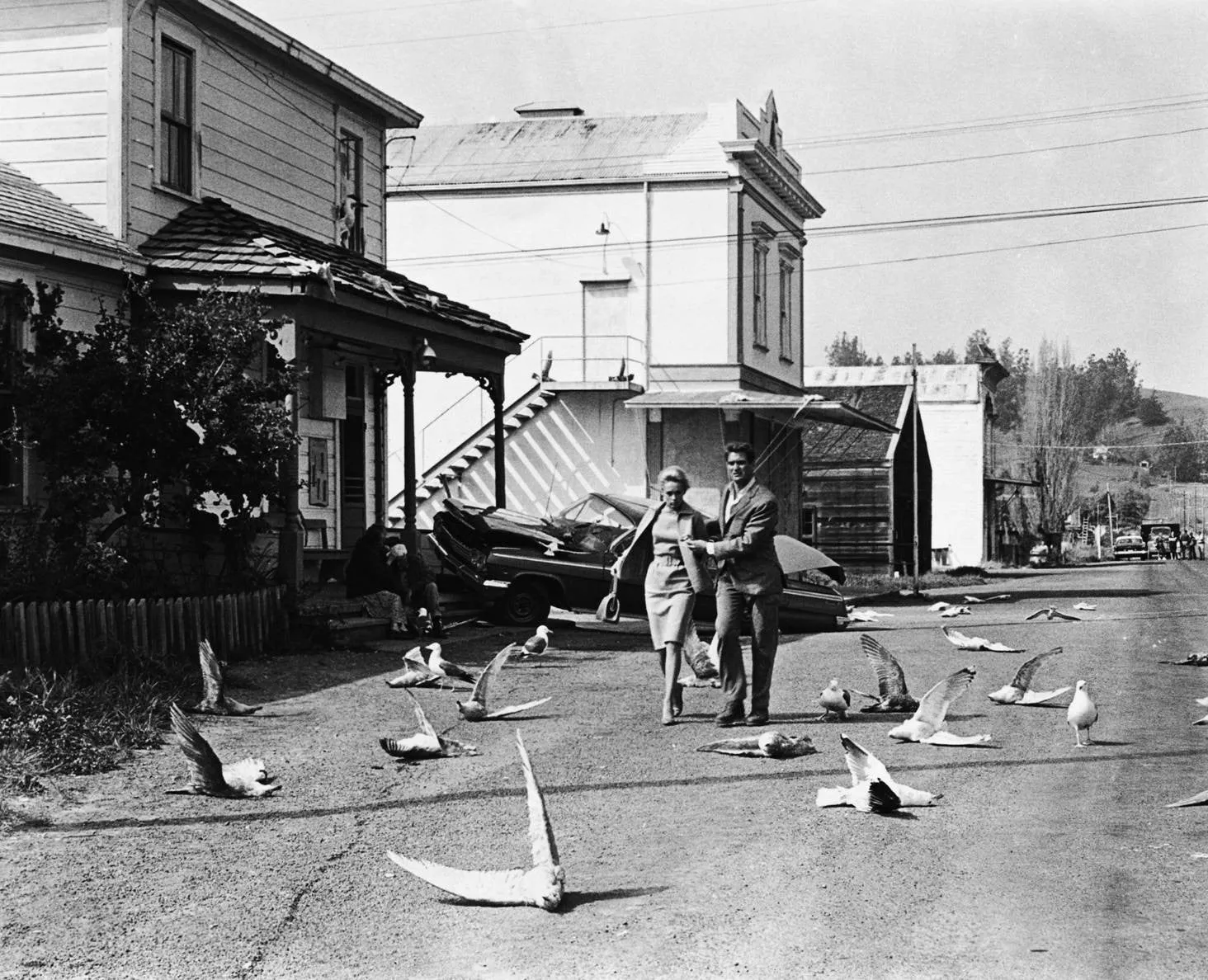 The Birds (1963)
The small town of Bodega Bay, the setting for Alfred Hitchcock’s “The Birds” (1963), is envisioned by Hitchcock as a contained universe. The coast will be invaded by a divine and apocalyptic force, through a violent attack by birds, in which space plays a fundamental role. From a visual perspective, the film is designed to be driven by the contrasts between different locations; the most obvious of these is the opposition between inside and outside. In fact, the buildings represent the only safe havens from the bird attacks: the Tidals cafe, the school, and the Brenner house become key elements, acting as protectors for the community, places imbued with an intrinsic power capable of safeguarding human lives.
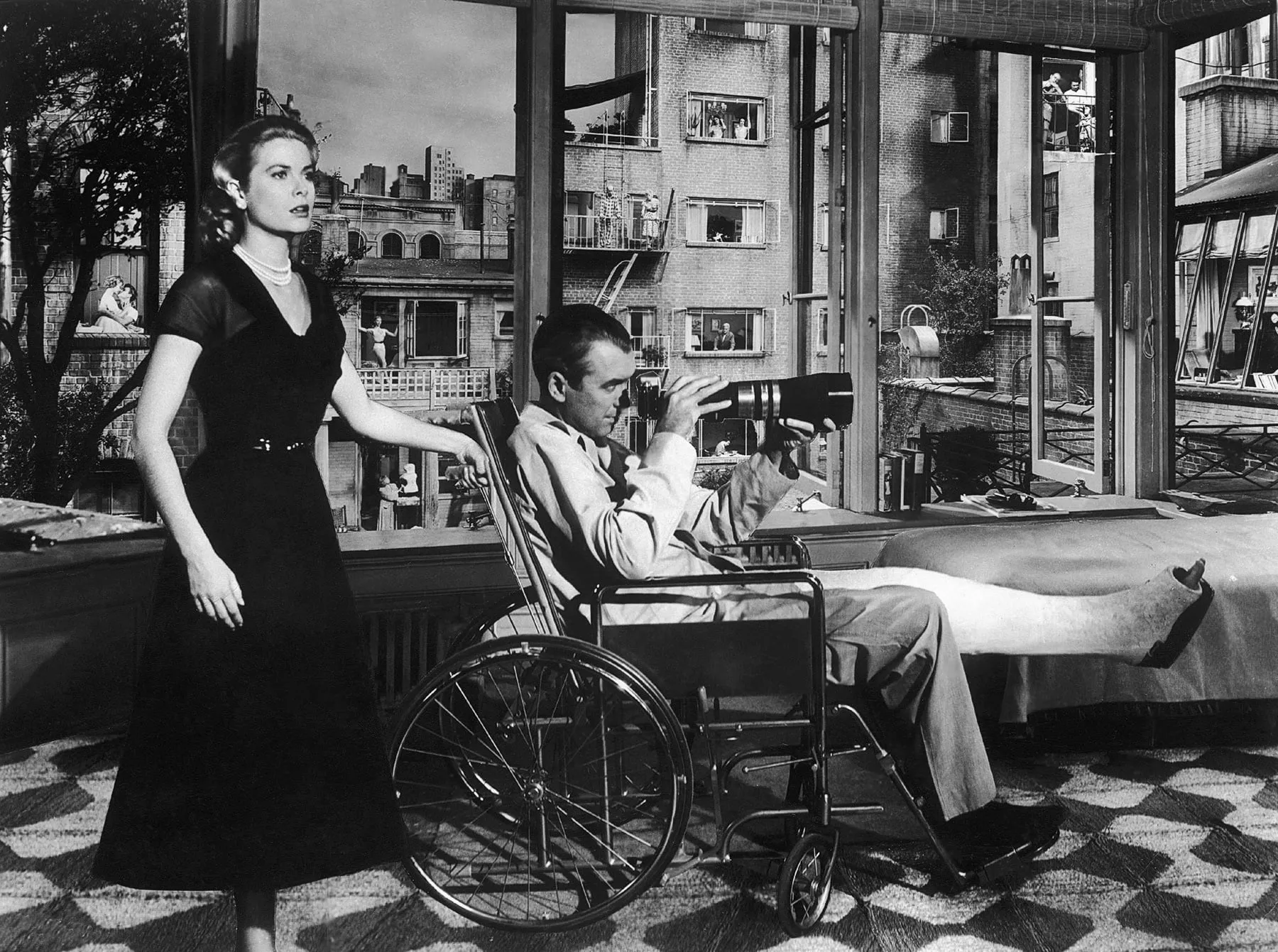 Rear Window (1954)
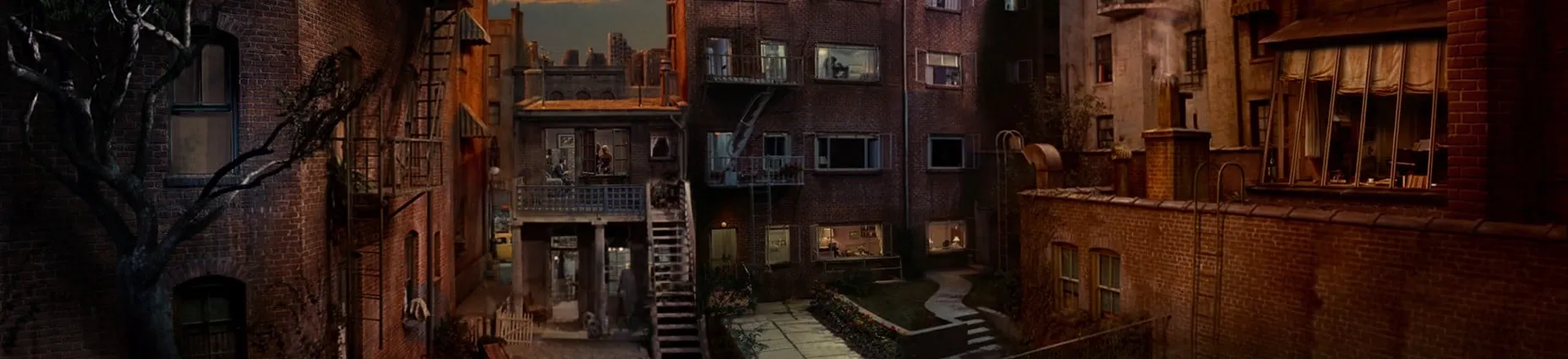
A special case is “Rear Window” (1954). This film exemplifies the space that drives the narrative. Alfred Hitchcock’s most meta-cinematic work is entirely shot from a single perspective: that of the photographer, Jeff. In addition to extensive use of the point-of-view shot, the director frames all the scenes from the photographer’s apartment, overlooking an interior courtyard in New York’s Greenwich Village. For this film, Paramount created the largest film set to date. Hitchcock’s intention was to recreate a typical American house in the studio, anonymous and repetitive; in this way, the architecture becomes a social container, and the urban landscape becomes a spectacle.