Italian peri-urban areas
Fabio Santaniello Bruun · · Automatically translated from Italian

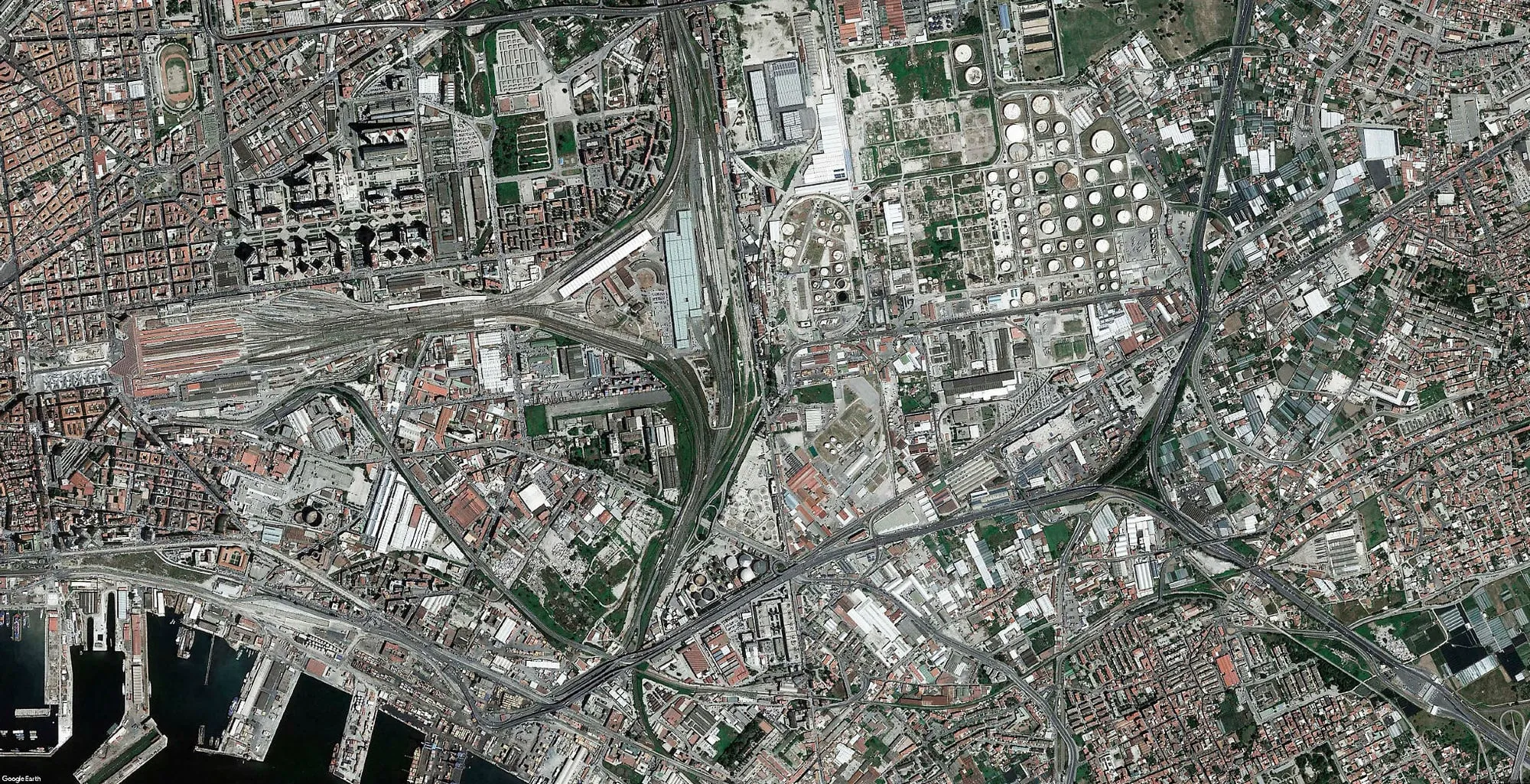
The discussion about the peri-urban area begins with the need to define this multifaceted phenomenon. One possible definition is that it is a border zone between urbanized areas and undeveloped land, including agricultural land, wasteland, or forests. It’s a band of varying width that surrounds the urban area, and within which there is a gradient between built-up and undeveloped areas; a zone where the organization and usability of spaces intended for one purpose or another are lacking, resulting in a loss of the qualities found in both urban and rural areas.
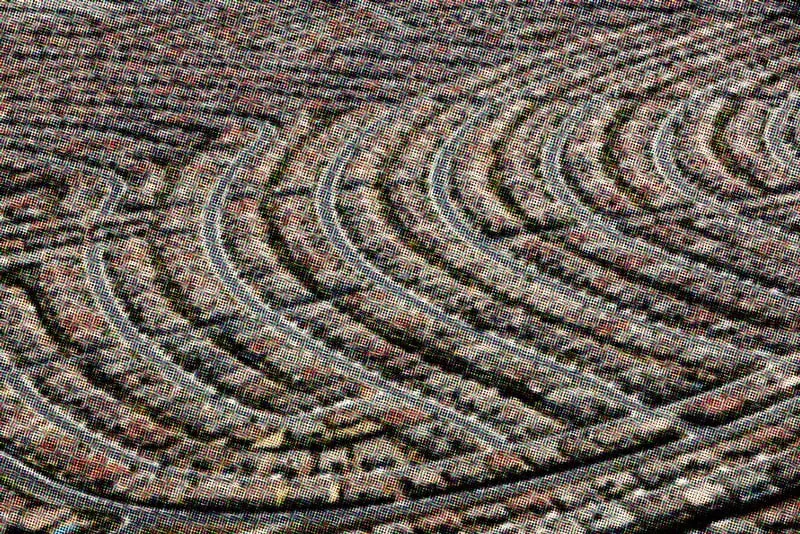
The peri-urban area often appears as a zone of uncontrolled development, or at least one organized according to urban plans that are poorly suited to the territory and inherited from outdated legislation, which is increasingly obviously inadequate for shaping the territory in a coherent and functional way. This results in a semi-random distribution of built-up and undeveloped areas, a legacy of the traditional system of farmhouses and cultivated fields, farms and landholdings. This has led to a complex and dispersed road network, and a lack of sufficient infrastructure. At the same time, for modern production methods, the fragmented distribution of agricultural land makes it difficult to move agricultural machinery and to organize crops efficiently, leaving areas everywhere in a state of abandonment, uncultivated and lacking in quality: these are “non-places,” far from being considered public green spaces.
 © Photo by Yann Arthus-Bertrand, Altitude
While the manifestations of periurbanization are extremely diverse, certain patterns can be identified in the formation of periurban municipalities. Following the demographic exodus from rural areas, the duration and intensity of which varied but was a widespread phenomenon until the 1960s in our country, the trend reversed, and a new population originating from urban areas began to arrive in these areas. This led to an increase in demand for housing, which was welcomed by both developers and landowners as a way to revitalize these municipalities.
This all occurs at a time when Italian families have greater financial resources. The exodus from rural areas is considered the first phase of the periurbanization process, followed by the urbanization of rural areas, and ultimately, in some cases, the emergence of the “dispersed city.” As Indovina explains, the transition from the dispersed urban model to the dispersed city is not automatic; it only occurs occasionally, when alongside houses and industrial buildings, services and commercial activities (shopping centers, multiplex cinemas, fitness centers) begin to emerge, creating a form of urban development that mimics the functionality of a compact city, but spread over a much larger area. The next stage, according to Indovina, is the “metropolitan archipelago,” characterized by the widespread distribution of prestigious services that were traditionally located within the central city.
 The resulting urbanization takes on various forms, but in all cases, the added value derived from it is mostly private rather than collective. The next immediate step following this quantitative growth is the establishment of a new equilibrium for new residents, a balance between the desire – let’s call it selfish – to maintain direct and exclusive contact with the “pristine” environment they have worked so hard to achieve, which leads them to halt growth within their own municipality, and the simultaneous desire for further development of the settlement, attracting the necessary and essential infrastructure that would improve the quality of life – the convenience – but which requires a certain user base to be sustainable. J.C. Castel helps us define this phenomenon with the term “arrival syndrome.” This syndrome encapsulates the desire to continue enjoying the environment one has “acquired,” at the expense of newcomers.
This creates an oscillation between maintaining the status quo and promoting further growth to reach the ideal population size for the development of certain services. It is precisely these services, especially educational facilities, that mark the difference between a municipality that is simply a dormitory town where nothing happens all day and a more vibrant community.
When municipalities closest to the central hub reach a certain level of saturation and maturity, market forces dictate that if residential demand continues to grow without a corresponding increase in supply, the inevitable result is an increase in housing prices and a shift in demand towards more distant municipalities, which are willing to provide land for development and thus initiate the first phases of the peri-urbanization process.
It is truly interesting that this concept is not only derived from academic literature or theoretical discussions, but is also evident in the real-life experiences of those who live in these areas. We will later include a quote from an article by Mitchell, published in the American National Geographic, where a farmer recounts his personal experience with urban sprawl, a phenomenon that is extremely prevalent in the United States.
“And what I find so ironic is that all these people who live here [in the areas that have been converted from farmland to urban sprawl] look out their back windows and see this beautiful, old farm. When I’m out there on the tractor, the kids from the new housing development are hanging over their fences, watching me. And you know what their parents say to the people who own that farm? They say, ‘You’re not going to sell it for development, are you? Are you?’”
Castel J.C., From urban sprawl to urban fragmentation, in Les Annales de la Recherche Urbaine 102, 2007
Indovina F., From the dispersed city to the metropolitan archipelago, Franco Angeli Edizioni, 2009
Mitchell J. G., Urban sprawl, Republished from the pages of National Geographic magazine, http://environment.nationalgeographic.com/environment/habitats/urban-sprawl/
Molinari M., The changing city: urban expansion. Residential mobility and emerging lifestyles in the municipality of Argelato (Bologna), Doctoral Thesis in Sociology, Coordinator: Prof. Ivo Colozzi, Supervisor: Prof. Giovanni Pieretti, 2012