Prototypology or protopathology?
· Automatically translated from Italian
Giulia Giambrone
“Prototypology – An Index of Process and Mutation” is the title of the new exhibition at the Roman gallery of Larry Gagosian. In addition to the visually striking perfection of the exhibition space, which is invariably architecturally suited to accommodate any contemporary and non-contemporary artwork, there is also the perception – a paradoxically positive one – of a space overflowing, not with artworks, but with objects-ideas. The exhibition reflects the brilliant chaos typical of the creative process in artistic ideation, and in this respect, it is fully in line with the curatorial intentions.
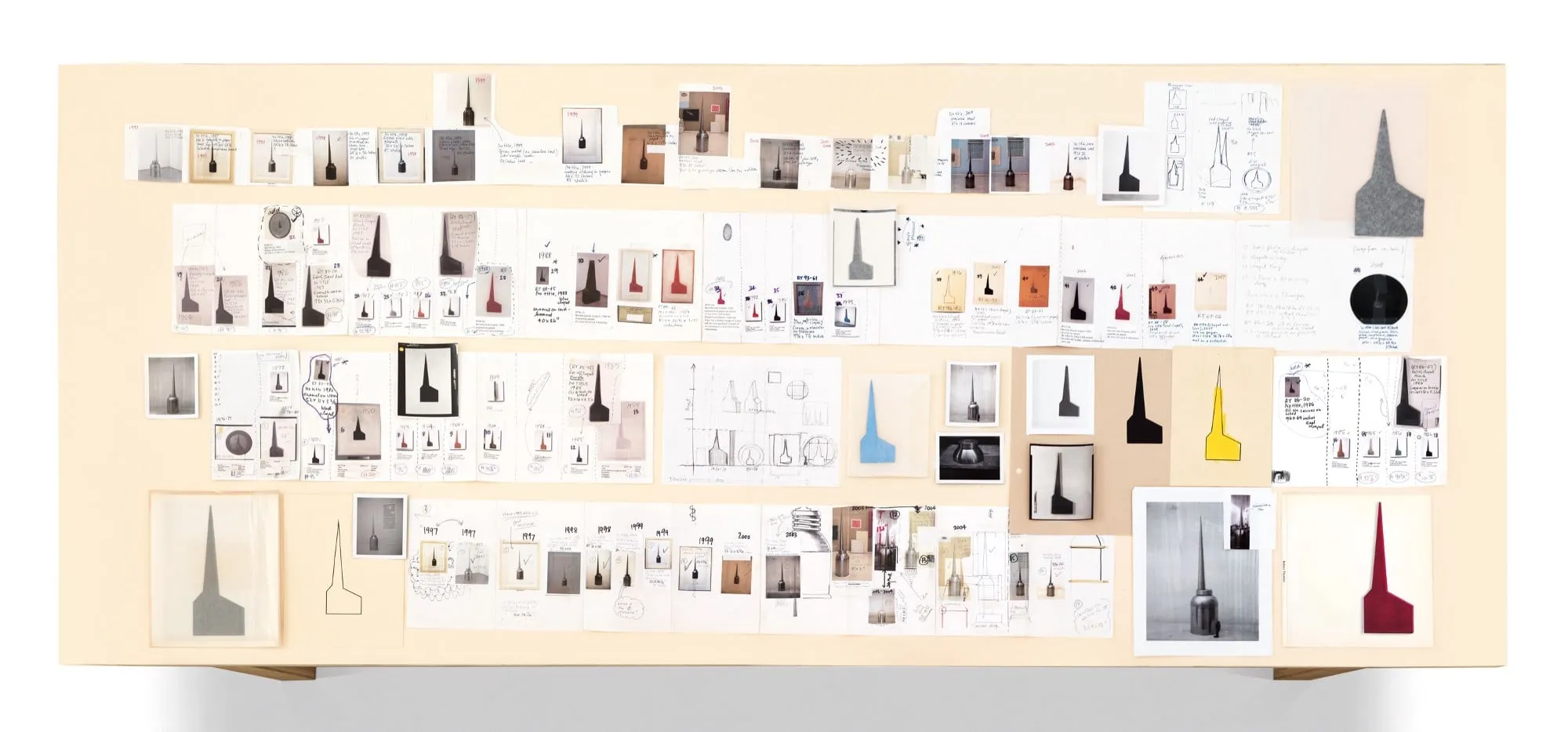
The basic concept of the exhibition – in its various branches – is the project, the study, or rather, the prototype (many of the works are by artists who work through large-scale installations). Thirty artists, representing a total of fifty-one different prototypes/studies, offer the viewer a sense of diversity within a mental universe whose foundation is the Idea. The concept of the idea as a potential act, a driving force of creativity, is thus revived, bringing back into vogue the avant-garde ideology, particularly that of Duchamp. The exhibition is divided into two levels of the gallery: on the first level, as usual, there is an introductory work, “macroscopic and domestic (prototype)” by Arcangelo Sassolino from 2010: a mechanism bordering on engineering ingenuity, based on the operation of a pneumatic system. On the second level, a display case containing the projects of Robert Therrien introduces the viewer to a masterful example of a prototype. “No title (oil can)” (2003) is a stainless steel object that evokes archetypal forms of everyday life, in line with the design aesthetics of the everyday. To the right, we find some sketches by Takashi Murakami, in which the overcrowding of figures and forms fully reflects a subaltern world to the real one, fueled by the traditional imagery of Japanese comics
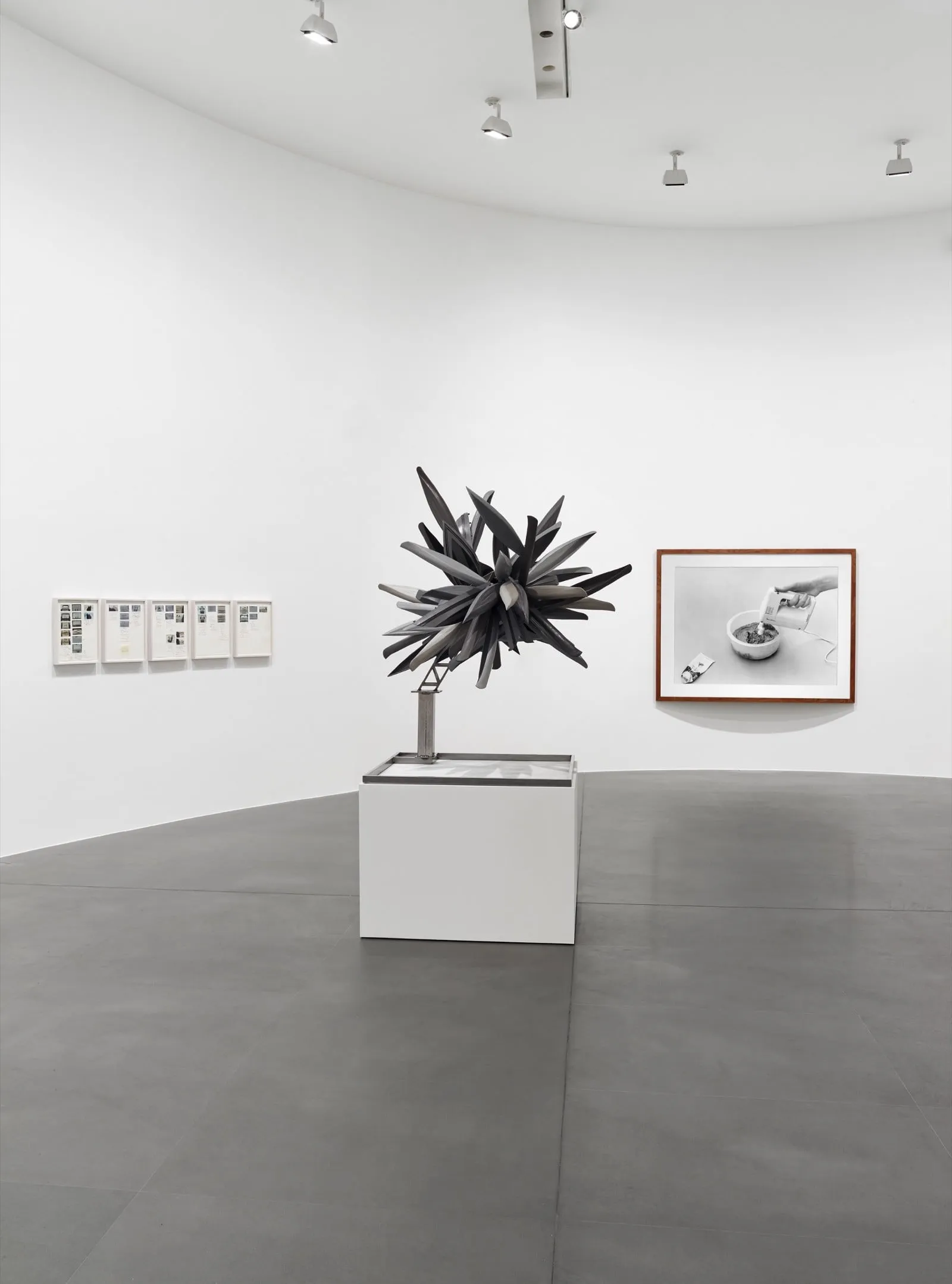
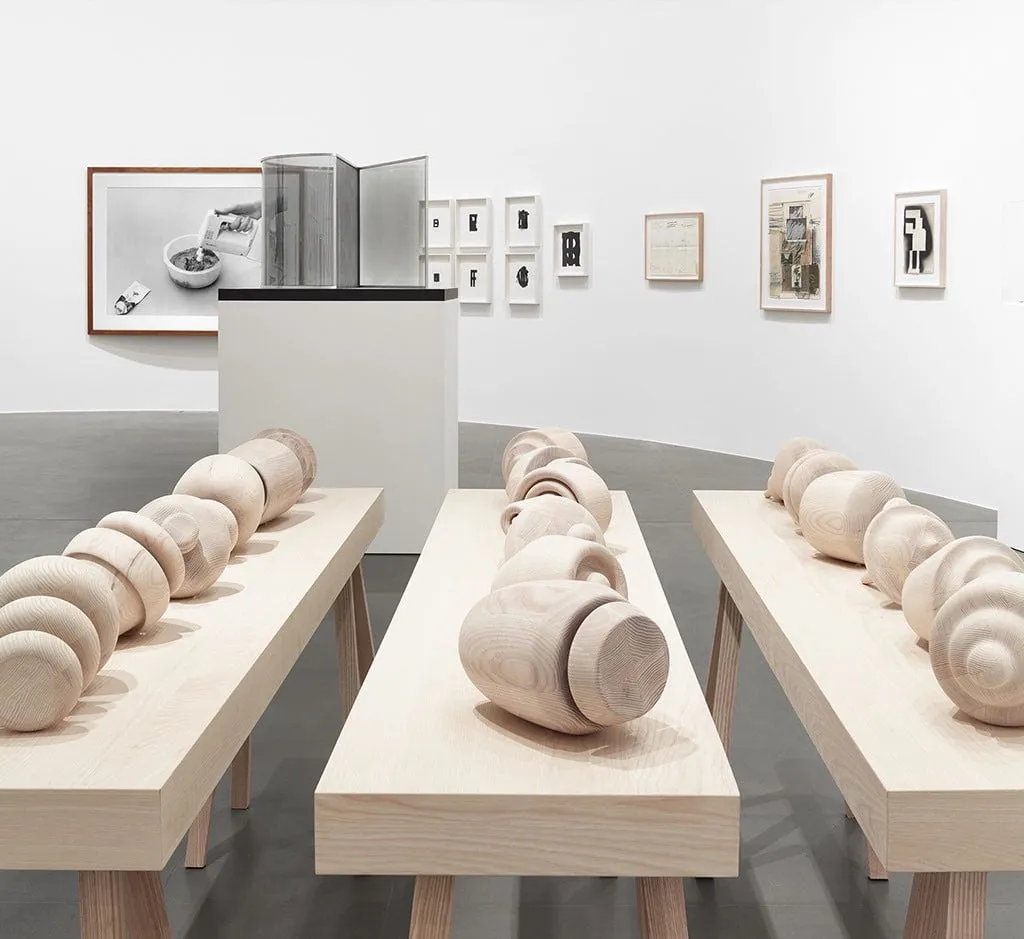
In the oval room, a taxonomy of ideas takes shape, molded through models and prototypes in their physical form. Chris Burden, Giuseppe Penone, Claes Oldenburg, Dan Graham, Michael Heizer, and Cy Twombly are among the artists featured. On the back wall, Rudolf Stingel’s grayscale photograph “Untitled (Instruction)” is the emblem of the entire exhibition: a hand is stirring something within a container, the nature of which is undefined. On the surface where the container rests, there is a small tube of paint. This represents the poetics of creation, which passes through the classical notion and enters the present, manifesting as an image that can be linked to the tangible nature of today’s pop objects. Another work, “The Shapes Project: Shapes Spinoffs” by Allan McCollum (2005–2014), features amorphous objects that simulate the process of derivation in the gestation of dissimilar forms, appearing different but similar in the mental representation of the creative source. The exhibition fulfills its exhibition goals – both technical and ideological – but also connects the narrative around the prototype to the tendency of an art of overpopulation and reproduction, which becomes pathological and encompasses hybrids from which the work ultimately derives its completeness
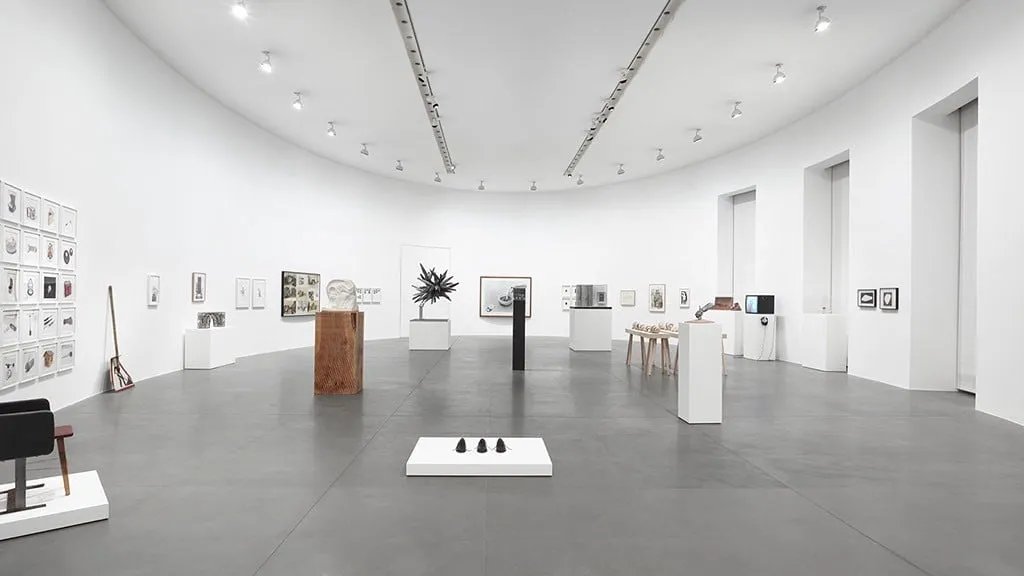
The multitude justifies the uncontrolled self-generation of forms, driven by the hand that shapes and the mind that thinks. The explanation lies in the unstoppable growth of the multiplicity of mediums available today, and their fusion, aimed solely at achieving the realization of the idea. Therefore, the exhibition reflects the condition of art in the contemporary era of hyper-availability of resources, and consequently, the diverse development of the ideas they convey. In short, the idea triggers an unstoppable process that becomes self-generating thanks to the plurality of languages available today. The tendency towards a feverish reproduction/representation of the idea becomes a necessity, a need, and can be seen as a form of pathology in contemporary art, although this does not exclusively imply a negative connotation. However, the symptoms are evident, and the synesthetic communication can remain suspended – sometimes absent – replaced by an apparent atrophy of the senses in favor of the rational thought required for understanding each project. A plausible cause is the prevailing techné inherent in the nature of the project. Seeking confirmation of this is the risk to be taken.